If you spot a snake on a trail and your dog is already straining at the leash, the most useful first move is not to inspect the eyes or the head shape. Move the dog away and give the snake an escape route. Identification can wait. No quick glance is worth stepping closer just to check whether the animal is dangerous.
What should you know in mainland France?
In mainland France, vipers are the snakes most often linked to serious envenomation. The common grass snakes and other harmless species people regularly encounter do not pose the same danger, although they may bite if grabbed. This advice does not apply to overseas territories or to an escaped exotic animal: in those cases, do not assume European field guides are enough to assess the risk.
A snake basking in the sun is often simply warming itself. If it freezes or puts on a defensive display, that is not an invitation to prod it with a stick. Step back, keep your animal under control, and go around the area widely whenever possible.
Why a triangular head is not a reliable clue
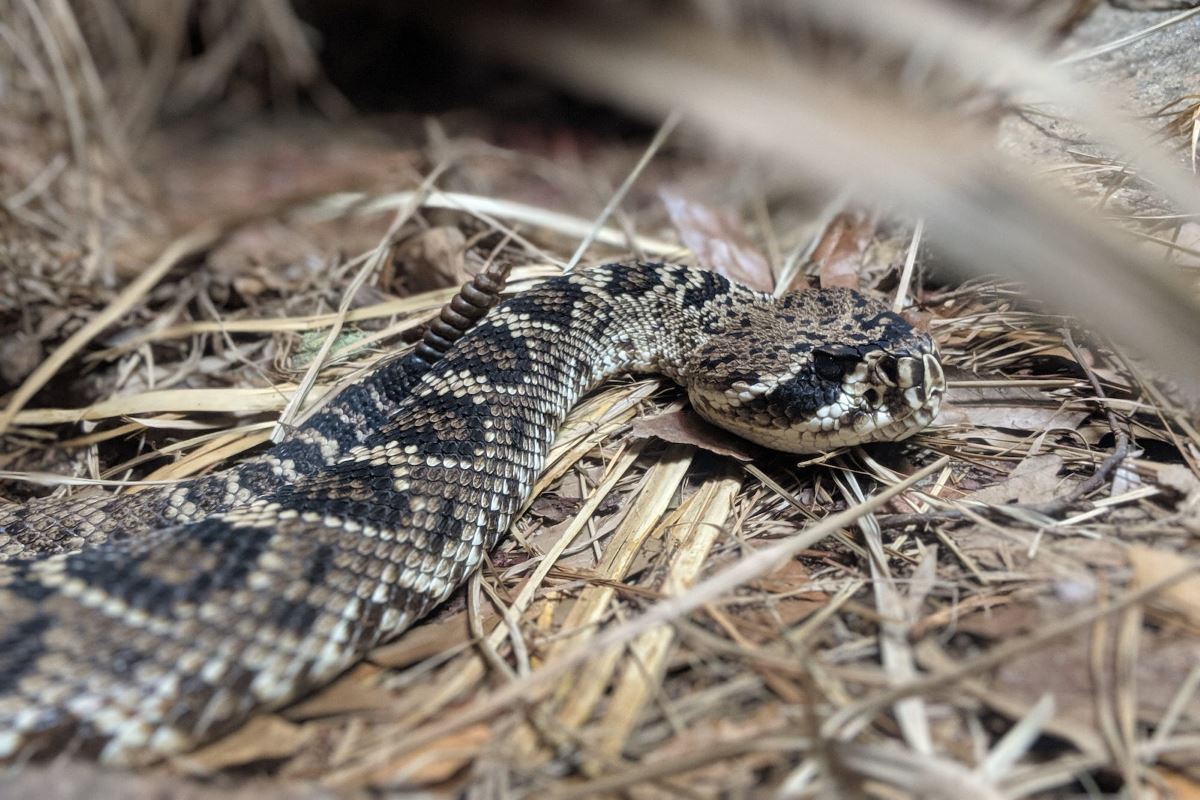
Body shape can offer some hints: vipers are often stockier and have relatively short tails, while many grass snakes look more slender. But angle, posture, and species make visual comparison tricky. Some harmless snakes flatten the head or display markings that resemble a viper.
The OFB presents the viperine snake, whose name is a good reminder of how misleading these resemblances can be. Defensive behaviour, hissing, or a raised S-shaped posture do not prove that a snake is venomous either. As for the eyes, if you need to move in close to check them, the criterion is already useless in practice.
How to observe without handling the animal
If you are at a safe distance, a photo taken with zoom can help a wildlife group identify the snake. Note the location, habitat, and date. A picture showing the whole body, even if it is not perfect, is usually more helpful than a close-up taken by moving too near.
- Do not block the snake’s escape route just to get a better photo.
- Do not lift it, even with a tool.
- Do not ask a child to get closer so you can judge its size.
- If you are still unsure what it is, simply keep your distance.
An app may suggest a species, but it does not give you permission to touch the animal and should never delay emergency care after a bite.
If someone is bitten
Call 15 or 112 and follow the instructions you are given. Stay calm, limit movement, and remove anything that could become tight if the area swells. Do not try to catch the snake. No tourniquet, no cutting, and no sucking out the venom. The detailed guidance from Assurance maladie on snake bites explains what to do next.
The fact that symptoms do not appear immediately does not mean the situation is harmless. Tell the emergency services the time of the bite, where it happened, and what changes you have noticed. A clear description is enough: do not go back to look for the snake.
What if your dog was bitten?
Contact a veterinarian or emergency clinic immediately and arrange transport. Keep the dog as calm as possible. Do not use home remedies and do not give human medicine. Swelling around the muzzle, sudden pain, or weakness after a suspicious encounter should be reported, even if you never saw the bite itself.
Explain the situation before you arrive so the clinic can prepare. Do not waste time trying to identify the snake with certainty. If you can carry or transport the dog without putting yourself at risk, avoid making it walk a long way back.
How to make walks less risky
In areas where snakes are present, keep your dog close and do not let it nose around rock piles or dense brush. Wear suitable footwear and look before placing your hand into a crevice or hidden space. If you are planning an outing with your companion, see our guide to hiking with a dog.
In the garden, the same principles apply: observe, leave space, and avoid handling the animal. The article on snakes in the garden explains useful changes you can make to the environment. You do not need to become a snake expert to react well: distance is a far better safeguard than improvised certainty.