
In a quiet house, even the smallest “pouic” can seem surprisingly loud. But your guinea pig is not necessarily having a problem just because it makes noise after you have gone to bed. It may simply be active at different times of the day and night. To understand what a sound means, pay attention to what your pet is doing at the same time.
A squeak in response to a rustling bag, a chattering of teeth when faced with another guinea pig, and a whistle that accompanies each breath are all very different things. The last one should not be dismissed by simply moving the cage farther from the bedroom.
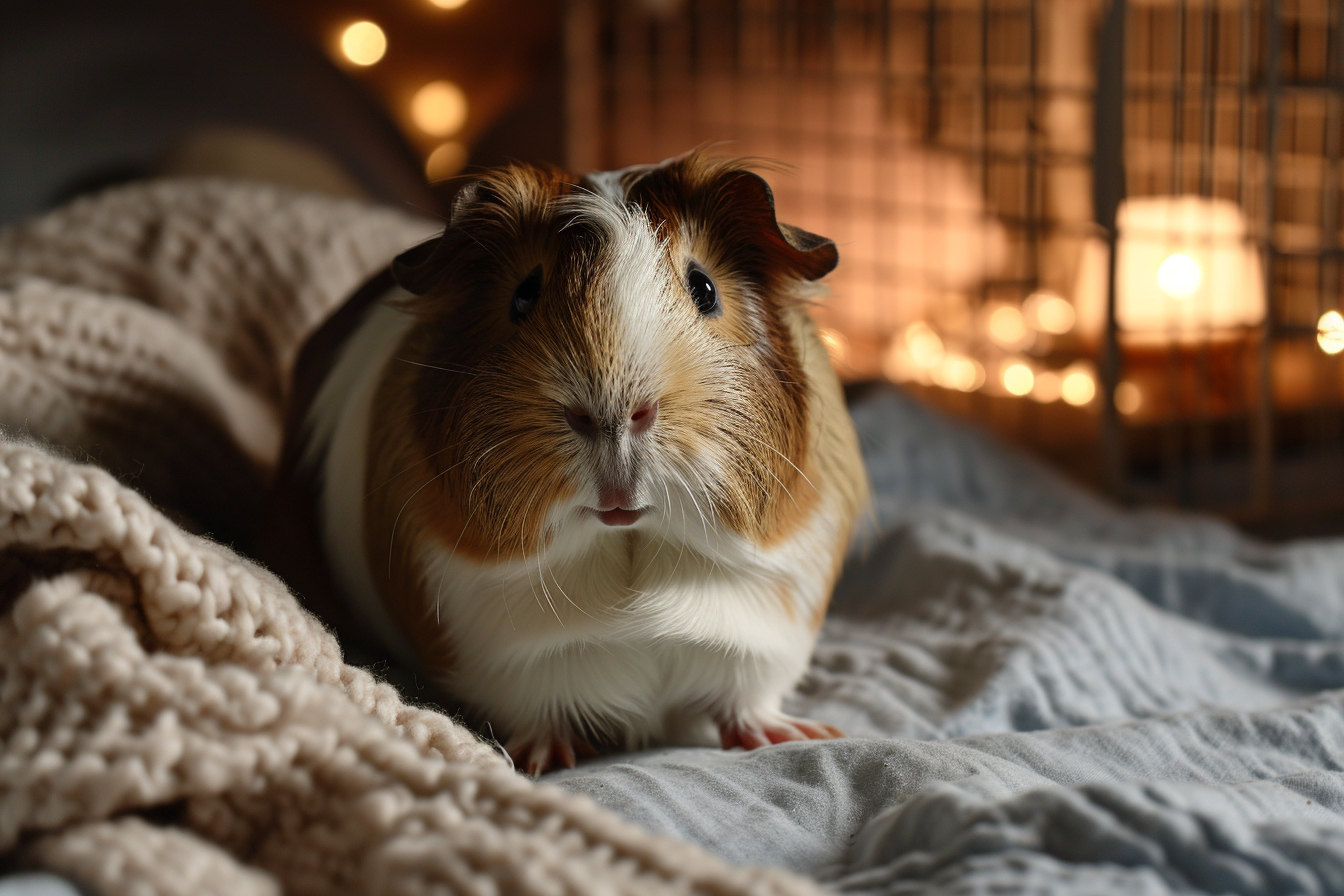
A small sound guide, to use with caution
Animal sounds are not a dictionary in which every noise has one fixed meaning. Volume, body posture, and what is happening around the guinea pig all matter. If you hear a sound without seeing the animal, it is easy to misunderstand what is really going on.
That is why a sound should always be read in context. The same vocalization may mean anticipation, excitement, tension, or discomfort depending on the situation. A short audio clip can sound worrying even when the real issue is simply that the guinea pig is communicating normally.
| What you hear | What to watch for |
|---|---|
| High-pitched squeaks when you approach | Is it expecting the usual feeding time? |
| Small noises while exploring | Is it moving freely and behaving as usual? |
| Low growling or vibrating sounds | What posture does it take, and toward which companion? |
| Teeth chattering | Is there tension, a face-off, or no way to escape? |
| Noise with every breath | Is it breathing with effort, hunched up, or eating less? |
The RSPCA Solent describes several guinea pig vocalizations. These references are useful for observation, but they do not replace a veterinary examination when a sound is new or accompanied by physical changes.
Why does the night seem so restless?
Your guinea pig may keep eating hay, drinking, and moving around while you are trying to sleep. Some of the noise may even come from the equipment itself: a bottle tapping against the bars, a metal hay rack, or a shelter being pushed around. Before trying to change your pet’s routine, identify the source of the sound.
Make sure accessories are securely fixed and that the enclosure sits on a stable surface. Check that no part is dangerously loose. Do not remove water or hay just to make the cage quieter. If the goal is a more peaceful night, the solution should be in the room setup, not in depriving the animal of what it needs.
If two guinea pigs are arguing
Watch the layout of the enclosure closely. A single hide with only one entrance can become a trap, and one resource may be guarded by a dominant animal. Offer several suitable hiding places, ideally with more than one exit, and spread out food and other resources. Make sure each guinea pig is actually eating rather than assuming everything is fine because the bowl is emptying.
Occasional chasing is not the same as repeated harassment. If one animal stays stuck, loses weight, or has wounds, seek advice from a veterinarian experienced with small mammals. If a fight breaks out, protect your hands and separate the animals without putting yourself between biting mouths.
What not to do in order to make it quiet
Do not bang on the cage, shout, or switch on a bright light every time you hear a sound. Avoid covering the enclosure completely, since that can interfere with ventilation, and do not move the guinea pigs to a cold or isolated room overnight. A new environment can create more stress, not less.
Keep care routines consistent and maintain a room without excessive disturbance. A calmer home does not need to be perfectly silent. The aim is to reduce avoidable disruption, not to stop all communication between the animals.
Signs that require a veterinary visit
A new breathing noise, visible effort to breathe, reduced appetite, fewer droppings, a hunched posture, or general lethargy all deserve prompt veterinary attention. Breathing difficulty is an emergency. Do not give human medication and do not try scented steam or essential oils.
To prepare for the call, note when the sound started, record a few seconds without provoking the noise, and mention what the animal has eaten and passed. A clear description of the situation is more useful than guessing. If everything else remains normal, compare several evenings before drawing conclusions.
Sometimes the alarming sound is simply the ordinary noise of small pets being active while the rest of the house is finally quiet. Once the television is off and the room is still, those everyday movements can seem much louder than they really are.