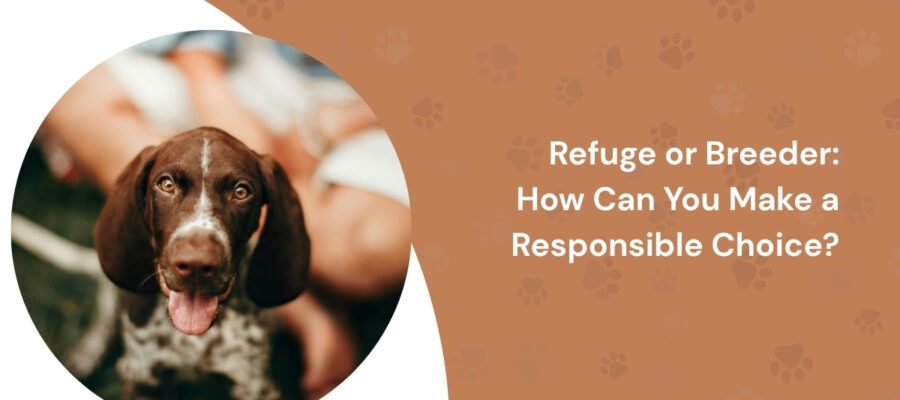
If you are deciding between adopting from a shelter and contacting a breeder, the process can feel very different. Yet one requirement is the same in both cases: you need to understand the animal, its background, and the conditions under which it will join your home before you decide. A polished advert or a reassuring speech is no substitute for facts you can verify.

Clarify your plans before you start looking
Before you contact anyone, take a realistic look at your daily life. Write down your work hours, your level of experience, any animals already living in the home, and the care you can genuinely provide. Are you looking for a young animal that will need guidance through every stage of learning, or an adult whose habits are already partly known? Do you have a specific reason for wanting a particular breed?
These questions help prevent a decision based only on a flattering photo or a compelling description. A guide to choosing a dog or cat according to your lifestyle can help you identify the main constraints from the outset. Even a carefully prepared plan will still need to adapt to the individual animal you meet.
What a shelter or association can tell you
A shelter or rescue association may have a known history, observations made during the animal’s stay, or feedback from a foster family. Ask clearly what is known with certainty and what remains uncertain. An animal that has been seen in a communal environment may behave quite differently once it settles into your home.
Questions about your housing situation and your absences are usually meant to assess compatibility. Give an honest picture of your routine rather than improving the details to increase your chances of approval. An article explaining how associations work can help you understand the steps, fees, and follow-up involved.
Checks to make with a breeder
Ask to see the animal’s living conditions and to understand the breeder’s practices. Ask about the parents, socialisation, care, and any health issues relevant to the breed. A test result should be explainable and clearly linked to the animal you are considering.
Having documents does not, on its own, guarantee a life free from illness. Be cautious of absolute promises about health or temperament. A responsible breeder should also be able to discuss the breed’s limits and obligations, not only its strengths.
Pay attention to how the animals are handled and whether you are able to ask questions without pressure. If you are rushed into a handover in a place where no proper verification is possible, it is wise to pause the process.
Documents and rules to check
The obligations vary depending on the species and the type of transfer. In particular, check identification, health documents, the contract, and information about the animal’s needs. The certificate of commitment and knowledge and the related waiting periods should also be reviewed when they apply to your purchase or adoption.
The Ministry of Agriculture’s FAQ outlines the procedures and documents that may apply. Always consult the current rules rather than relying on an old listing or a verbal claim from the person transferring the animal.
Do not sign anything you have not read. Ask for an explanation of any clauses relating to follow-up, commitments, and the situation if the placement no longer works out. Keep copies of all messages and documents you receive.
The meeting: observe without turning it into a test
Let the animal move around and approach at its own pace. Do not try to provoke a reaction by taking its food away or holding it down to “test its character.” Instead, ask for examples of real-life situations the animal has already experienced.
An animal that seems reserved during a visit is not necessarily a poor match for you. On the other hand, an immediately affectionate first encounter does not predict every difficulty that may arise later. A second meeting and a conversation with the people who know the animal well can be very helpful.
Prepare the home before the animal arrives
Organise food, access, transport, and the main spaces in advance. You can set up a resting area with a lovely basket, but placement, size, and the ability to rest undisturbed matter far more than appearance.
A guide to welcoming a puppy can provide a practical framework for the first few days. Adapt it to the animal’s age and species, and keep familiar feeding habits at the start when that is appropriate.
Plan for what happens after adoption or purchase
Ask who to contact if a question comes up and whether any follow-up is offered. Prepare for a veterinary visit if needed, a regular budget, and a possible care arrangement for times when you are away. The amount paid at the start does not reflect the full cost of the animal’s life over the years ahead.
If a problem appears, contact the appropriate people quickly rather than waiting until it becomes unmanageable. Describe the facts clearly and do not hide any health or safety concerns.
The choice needs time
Pressure to pay immediately, contradictory information, or documents that cannot be reviewed properly are all reasons to slow down. You do not have to decide under guilt or because you fear the advert will disappear.
Shelter adoption and breeder purchase do not require exactly the same checks, but the logic remains the same: a clear origin, a proper understanding of the animal’s needs, and a commitment your household can genuinely keep.