People want to wash their pets without irritating their skin, and a bottle labeled “organic” can feel reassuring. But a natural origin or a certification does not automatically mean a shampoo is suitable for your dog or cat. The species, the condition of the skin, the formula, and the directions for use matter more than the label’s color or marketing language.
Organic, natural, and gentle: three words worth checking
“Natural” usually describes how a product is presented by the seller. “Organic” may refer to specific ingredients or to a recognized standard. “Gentle” suggests a mild product, but it does not say which animals it is meant for or how it should be used. It is better to verify what is actually certified and by whom than to assume that every item in the range follows the same standard.
None of these labels means the product is safe if swallowed, non-irritating in every case, or suitable for damaged skin. A cosmetic shampoo is also not a parasite treatment simply because it contains fragrant plants.
Essential information before you buy
- Species: the label must clearly include your pet. Do not use a dog product on a cat just because it looks similar.
- Purpose: routine washing, a special need, and a prescribed product are not interchangeable.
- Directions for use: check whether dilution is needed, how much to apply, how long it should stay on, and whether rinsing is required.
- Restrictions: look for age limits, areas to avoid, and any precautions listed by the manufacturer.
- Traceability: the manufacturer’s name, an accessible ingredient list, and contact details for questions should all be easy to find.
A shop such as the one available at this address may offer several formulas. Each product should be assessed on its own: what is true for one line does not automatically apply to every item in the catalog. If the essential details are missing, ask for them before ordering.
Essential oils are not a shortcut to safety
The scent of lavender or mint may be pleasant to people without being appropriate for animals. The ASPCA explains the risks linked to certain exposures to essential oils. It is best to avoid homemade mixtures and to avoid adding a few drops of oil to an already formulated shampoo.
The issue is not that every plant-based ingredient is harmful, but that safety cannot be assumed from natural origin alone. Concentration, formulation, species, and route of exposure all matter. Animals often lick themselves after a wash, which means residue can be ingested; rinsing thoroughly is therefore not a step to rush through.
Do you really need a shampoo every time?
After a walk, a towel or a local rinse may be enough depending on how dirty the coat is. A full bath after every outing is not automatically useful. Cats usually keep their coats clean on their own; if a cat’s fur becomes greasy, dirty, or neglected without a clear reason, it is better to look for the cause than to hide the problem with fragrance.
How often a pet needs bathing depends on coat type, lifestyle, and any veterinary advice. There is no universal schedule that suits every animal. To manage wet walks and muddy paws, a practical winter routine can focus on drying and checking the feet rather than bathing the whole pet each time.
A comfortable wash, step by step
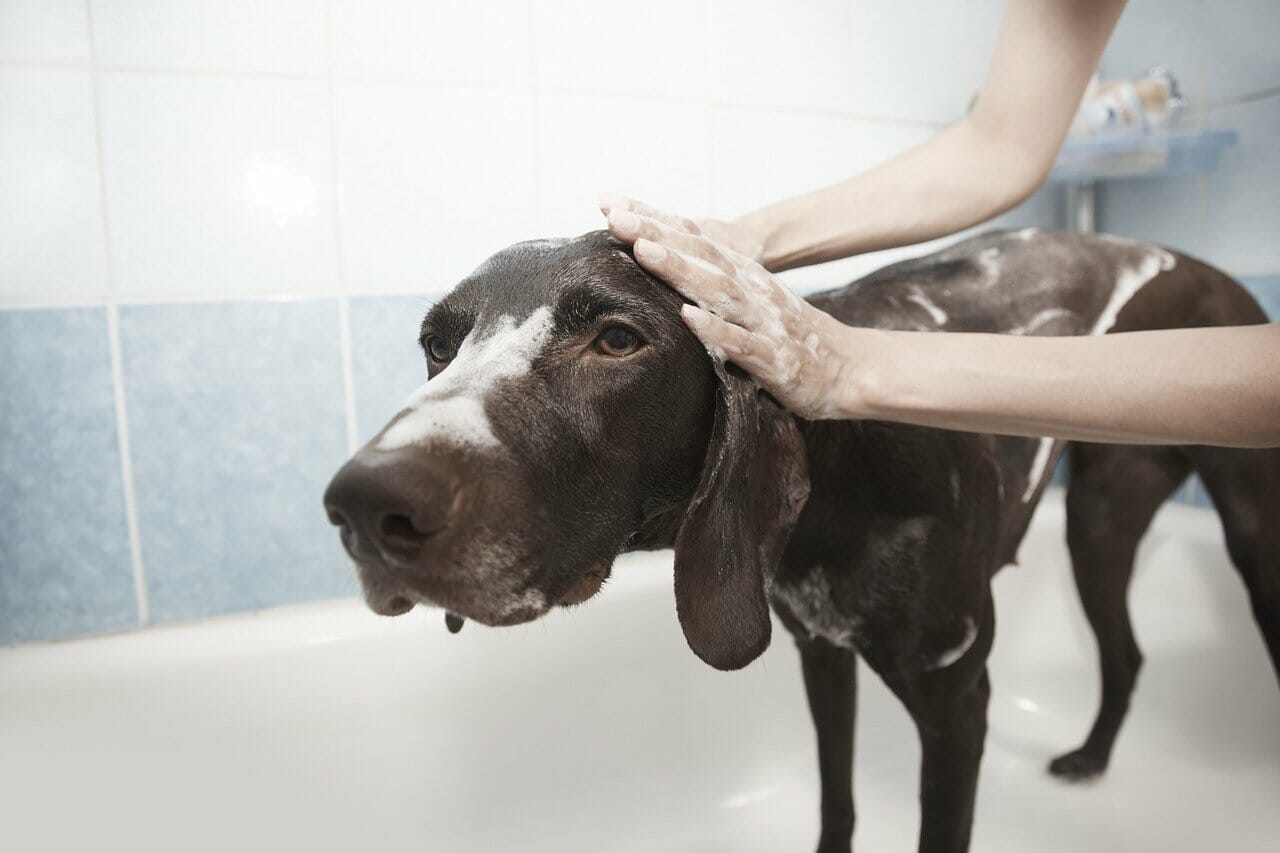
Before you begin, prepare towels, the product, and a non-slip surface. Use comfortably warm water, avoid strong pressure, and keep away from the eyes and ear canals. Follow the instructions for application; leaving the shampoo on longer will not necessarily improve the result.
Rinse carefully, then dry the animal gently without overheating or startling it. If the process becomes too stressful, pause and consider a different approach. For animals that do not tolerate bathing well, a skilled groomer or a veterinarian can help determine a better method, especially when a skin problem is involved.
When shampoo choice should come after a veterinary check
Persistent itching, redness, sores, hair loss, or an unusual odor are not simply signs that a pet needs cleaning. A scented product may temporarily mask the symptom without addressing the underlying cause. Have the animal examined before trying several products in succession.
If irritation appears after use, stop using the product and seek advice while keeping the bottle. In the event of illness, breathing difficulty, or concerning ingestion, contact a veterinarian quickly. When shopping, compare the available information and the guidance you receive; the best bottle is the one that meets a clearly identified need, not the one that makes the biggest promises.