
Cold weather at the gate does not automatically mean your horse needs a heavy rug. The right choice depends on the horse’s condition, coat, clipping, shelter, and the actual weather. A well-chosen rug can help, but too much insulation or a poor fit can just as easily cause discomfort.
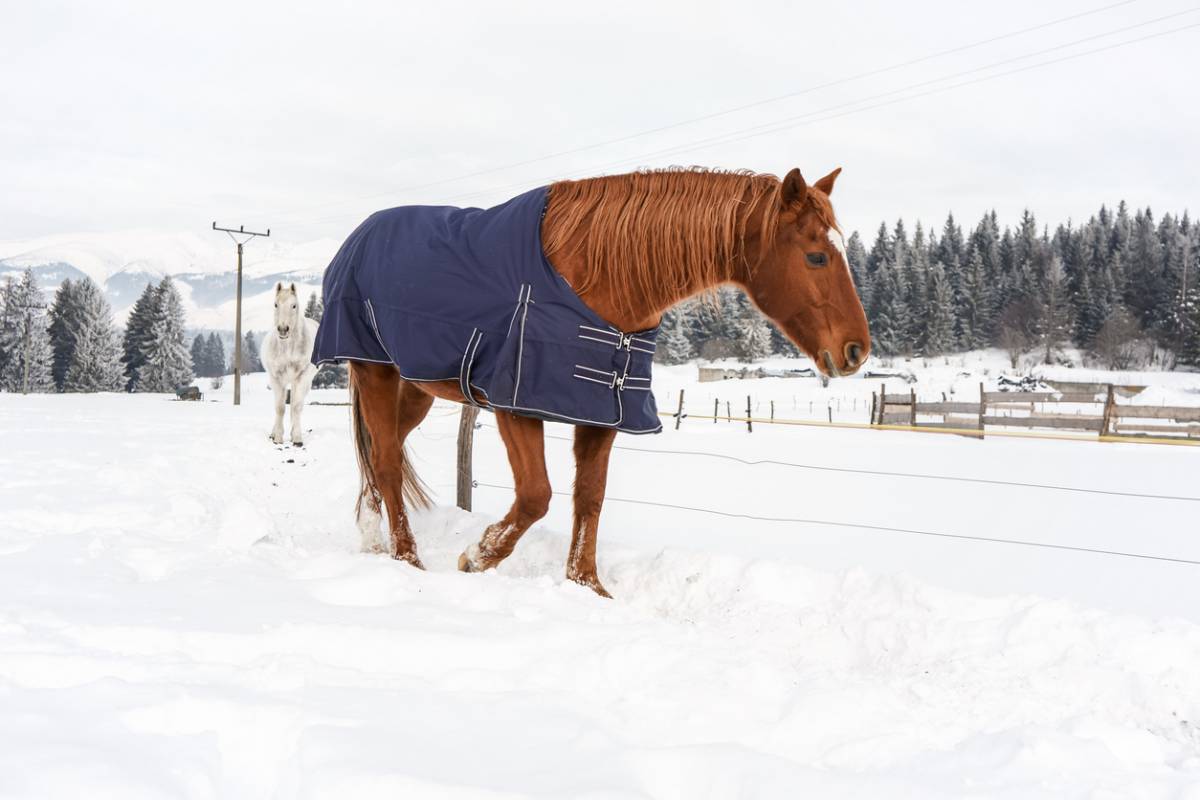
Start with the horse, not the temperature alone
Begin by looking at the horse itself: body condition, age, health, acclimatisation, and whether it has a winter coat. A clipped horse, a thin horse, or one recovering from illness may need something very different from a healthy, unclipped horse with access to shelter.
The British Horse Society explains the main rugging criteria and notes that some horses can get through winter without being routinely rugged. The decision should be reviewed as conditions change and as the individual horse’s needs become clearer.
If your horse starts losing condition, shivering, or showing signs of discomfort, seek advice. Adding a rug should never replace proper attention to feed, health, shelter, and access to essential resources.
Rain, wind, and daily living conditions
A dry, cold day does not create the same challenge as prolonged rain combined with wind. Pay attention to where the horse spends time, whether the ground is wet, and whether it can reach shelter without being pushed away by another horse.
A stable rug is not automatically suitable for outdoor use. For turnout, check that the rug is waterproof, breathable, and durable enough for the conditions. A rug that leaks or traps moisture will not provide the comfort you expect.
Understanding fill weight without following a chart blindly
Fill weight generally indicates how much insulating material a rug contains, but it does not tell the full story. Fabric, cut, dampness, and the condition of the rug all matter too. Two rugs with the same number can perform very differently.
It is best not to apply a fixed temperature-to-fill-weight rule to every horse. Use charts as a starting point, then observe the animal. A change in weather during the day may also mean the rug needs to be adjusted.
Measure carefully and check the fit
Follow the manufacturer’s measuring guide and compare the exact dimensions before buying. Then check the shoulders, withers, chest closure, and overall length. The horse should be able to move freely without the rug pulling or twisting.
Adjust the straps according to the instructions: too loose, and they may create a snagging risk; too tight, and they may restrict movement. Check the fit again after the horse has walked and moved, not only when it is standing still at the tie-up point.
To compare options, horsily.fr may be a useful place to start. Prepare your measurements and check return options, replaceable parts, and care instructions before making a choice.
Is a neck cover necessary?
A neck cover can be helpful in some situations, but it is not always an advantage. Check the fit, any rubbing, and how freely the horse can move its neck. A more enveloping rug also creates more areas that need to be monitored.
If hair becomes worn, the skin turns red, or the horse seems bothered, look for the cause rather than simply tightening the fastenings. A different cut or a different setup may be needed.
Remove the rug to inspect underneath
An outside check is not enough. Remove the rug regularly, ideally every day, to examine the skin, coat, rubbing points, and overall body condition. Also check for dampness or excessive warmth beneath the fabric.
Do not rely only on the temperature of the ears when making a decision. Look at the horse as a whole and ask a professional how to assess comfort properly. Daily horse care routines should include these checks as part of a broader management plan.
After exercise and during weather changes
A horse that is wet after work needs the right approach to drying and cooling down. A turnout rug does not automatically replace a cooler or the after-exercise routine. Follow your coach’s or stable manager’s advice, along with the equipment’s intended use.
Think ahead about who will be able to change or remove the rug if the temperature rises while you are away. What seems appropriate in the morning may be too warm a few hours later. Human availability is part of what makes a rug genuinely practical.
Maintain the rug to preserve its performance
Wash the rug according to the instructions, using suitable products and allowing it to dry completely. Check the seams, fastenings, and any tears. Repairs should be secure and should not leave any rough or abrasive areas.
Keep a backup option available if an essential rug becomes wet or damaged. The best purchase is not necessarily the one with the highest fill weight, but the one you can fit properly, inspect regularly, and maintain over time.