If your dog starts scratching after an evening outdoors, it is natural to look for a way to keep mosquitoes away. The first instinct should not be to reach for your own spray. Protection should focus on the environment and, depending on the region and the risks involved, on veterinary prevention tailored to the species. A product made for people, even one described as natural, is not automatically safe to use on an animal.
Why not stop at the itching?
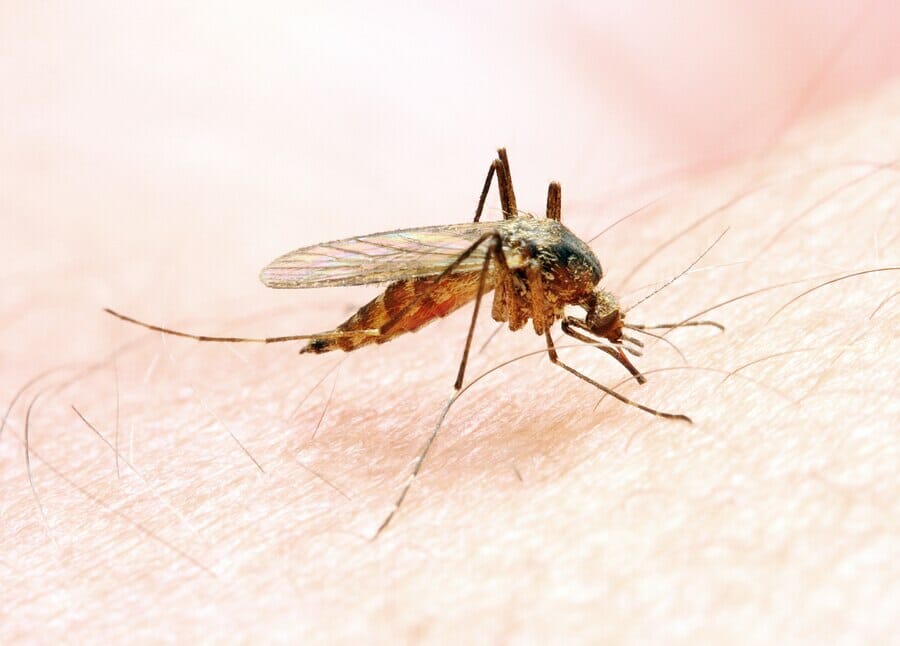
A mosquito bite may cause simple irritation, but some mosquitoes can also transmit parasites. ESCCAP notably describes the transmission of dirofilarias. The level of risk depends on the location, local conditions, and the animal’s exposure; it does not mean that every mosquito carries a parasite or that every bite leads to illness.
Sand flies, which are involved in the transmission of leishmaniasis, are different insects and should not be confused with mosquitoes. If you are preparing for a trip, ask the veterinarian which risks apply to your destination and to your animal. A flea or tick treatment does not necessarily provide protection against these vectors.
Check for small standing-water sources
Empty unused saucers, hollow toys left outside, and buckets that have been forgotten in the garden. Check rainwater collectors and gutters only if they can be accessed safely. The goal is not to dry out the entire garden, but to remove the small pockets of water that no one is monitoring.
Always keep drinking water available for your animal. Clean the bowl and refresh the water regularly rather than taking it away. If several people care for the pet, agree on who will check the garden and the containers. It is the repeated small oversights that make this routine ineffective.
The linked article on mosquito control can offer additional general background; for medical prevention for your animal, rely on the veterinarian and parasitology recommendations.
Reduce how mosquitoes get into the house
A well-fitted mosquito screen with no tears around the frame is one of the simplest protections to check. Make sure it does not create a false sense of security for a cat leaning against it: an insect screen is not always designed to hold an animal at a window.
Offer an indoor resting place when insects are plentiful. Activity periods vary according to species, so a rule that only covers dusk is not enough everywhere. Observe local conditions and avoid leaving the animal still in a heavily exposed area. For other insects in the home, a guide to dealing with them without exposing pets to household treatments can help with the first steps of assessment.
Choose products with your veterinarian
Give the veterinarian the species, age, weight, current treatments, travel destinations, and whether other animals live in the home. The prevention plan may differ for a dog and a cat, and protection against one parasite does not necessarily serve as a repellent against bites.
Follow the instructions and the advice you receive exactly. Do not use a dog pipette on a cat, do not divide a dose by guesswork, and do not add a second product to “boost” the effect. Also mention whether your animals groom or lick one another, because contact after application may require special precautions.
Essential oils, citronella, and sprays designed for human skin are not safe improvised substitutes. Likewise, an insecticide for the terrace must never be used on the coat. If you are traveling, arrange the appointment in advance rather than looking for a solution on the evening before departure.
What should you do after a suspected bite?
Look at the area without squeezing or scratching it. Avoid human ointments, topical antibiotics, and improvised bandages: the animal may lick them off, and the lesion may have another cause. If the area swells, becomes painful, worsens, or the scratching continues, have it checked.
Breathing difficulty, fainting, or significant swelling of the face require urgent veterinary attention. A small bump on its own also does not allow you to identify the insect. Take a dated photo to track changes and note any products that may already have been used.
Check before you travel
Prepare the exact destination, travel dates, and type of accommodation, then ask for the prevention schedule, including after the return if needed. Bring the product instructions and names with you. This preparation avoids the false confidence of “it already has flea protection” and helps you enjoy outings with a consistent prevention plan.