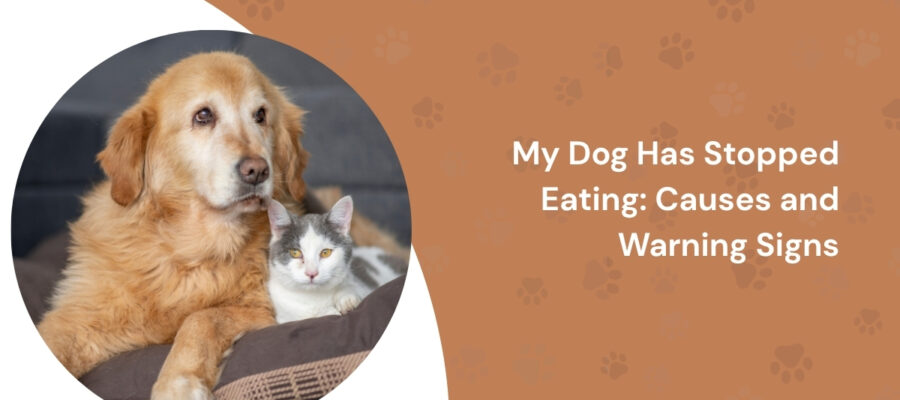
If the bowl is still full and your dog, usually the first one at mealtime, is suddenly turning away from food, take it seriously. Loss of appetite is a symptom to understand, not a stubborn habit to argue with. The context matters: a single skipped meal in an otherwise healthy adult dog is not the same as refusing food in a weak puppy or in a dog that is vomiting. Start by observing the animal, not by opening five different bags.
Does he not want to eat, or can he not eat?
The distinction is important. A dog may lose interest in food, especially if nausea or illness is involved. Another may approach the bowl, take a bite, and then drop it because chewing or swallowing hurts. Veterinarians sometimes use the term pseudo-anorexia for that second situation.
The VCA sheet on anorexia in dogs explains these mechanisms and why the underlying cause must be found. Here, the word does not mean the same thing as a human eating disorder. Mouth pain, digestive problems, systemic illness, medication effects, or a stressful environment can all play a role in the assessment.
When should you call immediately?
- Your dog is very weak, collapses, or is breathing abnormally.
- He vomits repeatedly, has blood in the vomit, seems very painful, or has a swollen abdomen.
- He keeps trying to vomit but nothing comes up.
- He may have swallowed an object, a toxic product, or a medication.
- He is a puppy, a diabetic dog, a sick dog, or a dog on treatment that depends on meals.
In these situations, do not wait for an arbitrary time limit before calling. You can also refer to general warning signs such as vomiting blood in dogs. For an adult dog who otherwise seems normal, refusal to eat that repeats or lasts too long also deserves an early call to the clinic; do not wait until weight loss becomes obvious.
Observations that really help
Write down the last full meal, the usual portion size, and what has been eaten since then, including treats. “He is eating nothing” and “he refuses his kibble but accepts several biscuits” describe two different situations, even if the second does not rule out illness.
Look at how much water he drinks, as well as his urine, stool, energy level, and posture. Mention any new bad breath, chewing on only one side, or teeth chattering. Do not force his mouth open: a painful dog may defend himself, even if he is usually very gentle.
What you can prepare without forcing him
Check whether the food is still fresh, whether the bowl is clean, and whether there has been an unnoticed recipe change. Offer the meal in a quiet place, away from another animal that might be watching or pressuring him. If the clinic recommends home monitoring, follow its instructions on the food and the amount to offer.
Avoid turning the day into a buffet of table scraps, fatty foods, cheese, and random new items. That makes the observations harder to interpret and can add digestive upset on top of the original problem. Do not force-feed with a syringe, and do not give appetite stimulants, human medication, or essential oils without a prescription.
What happens during the consultation?
The veterinarian usually begins with the history and a physical exam, especially of the mouth and overall condition. Depending on what is found, blood tests or imaging may be recommended. Not every dog needs the same workup; ask what each test is meant to confirm or rule out.
Treatment depends on the cause identified. Relieving pain, treating nausea, or arranging nutritional support are different responses to different problems. If your dog is already on medication, bring the boxes and the timing of the last doses rather than stopping or changing anything on your own.
After the appointment: track the real amounts
A very simple log is enough: time, food offered, amount eaten, any vomiting, and behavior. It helps show partial improvement or relapse without relying only on how things seem in the moment. Be sure to ask when you should call back if the appetite does not return.
It is understandable to feel relieved when the dog manages a few bites. But accepting a treat does not always mean the problem is solved. Keep following the plan that was set, and keep the same point of contact for adjustments: it brings clarity and spares the dog a string of unnecessary trials.