The Korat is a cat breed from Thailand, with a history that stretches back centuries. In Thai culture, it is considered a lucky cat and is often given as a gift for important occasions such as weddings. Its name is believed to come from the province of Nakhon Ratchasima, also known as “Korat,” where these cats were especially common. In Thailand, however, it is traditionally called “Si-Sawat,” meaning “color of prosperity,” a reference to its blue-gray coat with silver highlights.
The earliest references to the Korat appear in an ancient manuscript, the Tamra Maew, or “Book of Cat Poems,” dating from the 14th century. Preserved at the National Library of Bangkok, this document describes several cat breeds believed to bring good fortune or bad luck according to Siamese tradition. In it, the Korat is presented as a noble cat, associated with luck and wealth. Unlike the Siamese, which was often reserved for the royal family, the Korat was more commonly a cat given as a sign of good omen.
Despite its long history in Thailand, the Korat remained relatively rare outside its country of origin until the 20th century. Its introduction to the Western world was gradual. Some cats are said to have been brought to England as early as the late 19th century, but they were not recognized as a distinct breed from the Siamese. It was not until 1959 that the first officially recognized Korats were imported into the United States by a pair of American breeders, Jean and Niels Jensen. These cats came directly from a royal Thai breeding program, helping to preserve their genetic purity.
In 1966, the breed was officially recognized by the Cat Fanciers’ Association (CFA), one of the leading American feline organizations. From that point on, interest in the Korat grew, especially in Europe, where it was introduced in the 1970s. The Fédération Internationale Féline eventually granted official recognition in 1982.
Today, the Korat is appreciated for its elegant appearance and affectionate nature. Even so, it remains relatively rare compared with more popular breeds such as the Siamese or the British Shorthair. Breeding is closely monitored to preserve its distinctive traits, especially the blue-gray coat and intense green, pearl-like eyes.
Even as it spread internationally, the Korat has retained a strong symbolic value in Thailand. It is still associated with luck and prosperity, and some people continue to regard it as a true good-luck charm, carrying on a tradition that is several centuries old.
The Korat’s personality
The Korat stands out for its sociable, affectionate nature. A true everyday companion, this cat tends to follow its owner from room to room, announcing its presence with soft, expressive meows. Its natural curiosity leads it to explore its surroundings carefully. Because it becomes deeply attached to its family, it is especially demonstrative and will readily ask for attention and affection.
Highly trainable, the Korat quickly learns interactive games. Some even learn to fetch toys, much like a small dog. This adaptability is matched by a sensitivity to the mood of the home. Its remarkable intelligence helps it quickly understand family routines and adapt to them, creating a strong bond with its people.
Calm and composed, this cat prefers a quiet environment. Its reserved temperament thrives in a peaceful household, away from noisy surroundings. Its tendency to form a deep bond with just one person makes it a loyal and somewhat exclusive companion. This sensitivity also shows in its response to strangers, toward whom it may be shy at first. Once it feels safe, however, the Korat reveals a playful and affectionate side, especially with calm people who respect its need for peace and quiet.
The ideal owner for a Korat
A Korat owner should be available and patient. Regular presence at home helps meet the emotional needs of this cat, which does not handle solitude well.
Someone who works from home or leads a quieter lifestyle is an excellent match. The ideal owner will also value calm, since this breed thrives in a serene atmosphere far from constant noise.
Singles or couples without young children are a good fit for the Korat’s social needs. A secure garden is a bonus, although this cat adapts very well to apartment living.
Physical characteristics
Coat
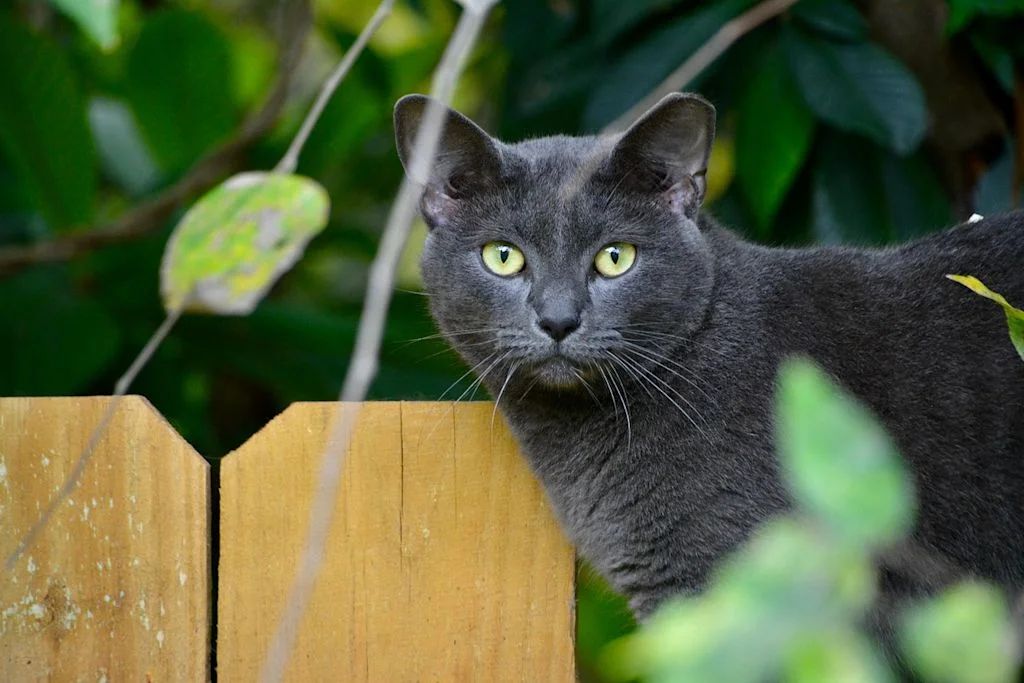
The Korat has a short, fine, silky coat with no undercoat. Its coat is exclusively blue-gray with silver highlights, like the Russian Blue or the Chartreux, which gives it a striking sheen in the light. This color comes from a specific genetic combination that creates a translucent, shimmering effect at the tips of the hairs.
Weight and size of an adult
The Korat is a medium-sized cat. Males usually weigh between 3 and 5 kg, while females are lighter at between 2.5 and 4 kg. Their height is around 25 to 30 cm at the shoulder. Despite its moderate weight, the Korat is muscular and dense, and often feels heavier than it looks.
Head and body
The Korat’s head has a distinctive heart shape, with a broad, slightly rounded forehead. Its large round eyes are a brilliant green in adulthood, although kittens first have amber eyes that gradually turn green. The ears are large, slightly rounded at the tips, and set well apart. The body is compact, muscular, and athletic, giving the cat great agility. The legs are proportionate to the body, with oval feet and pads often tinted blue or lavender. The tail is medium in length, thick at the base and tapering slightly toward a rounded tip.
Grooming and care
Grooming the Korat
Korat grooming is refreshingly simple. A weekly brushing with a soft brush is enough to maintain the natural beauty of its coat. This breed sheds very little, which is a real advantage for people concerned about cat hair in the home.
Regular checks of the eyes, claws, and ears complete the care routine. During the spring shedding season, increase brushing to twice a week.
Feeding the Korat
This food-loving cat needs careful monitoring to avoid weight gain. It is better to feed several small, balanced meals a day rather than one large meal.
It is possible to alternate high-quality kibble with homemade food, provided the diet is not too rich. Otherwise, obesity can develop quickly. Ask your veterinarian for advice.
Be sure to always keep a full bowl of fresh water available. Cats need to drink regularly to help prevent certain urinary problems.
Health issues in the Korat
The Korat is a relatively sturdy gray cat, but like all breeds, it can be predisposed to certain inherited diseases or breed-specific conditions. Thanks to its preserved genetic background and carefully managed breeding, it generally enjoys good health. Still, a few conditions deserve special attention in this breed.
With our Korat cat insurance, you can manage your companion’s healthcare budget with peace of mind and be reimbursed for up to 100% of veterinary costs in the event of an accident or illness. Request an online quote to get a personalized rate suited to your pet.
Genetic diseases in the Korat
Gangliosidosis is a rare but serious inherited neurological disease that affects certain Korat bloodlines. It is caused by an enzyme deficiency that disrupts lipid metabolism in nerve cells. It exists in two forms:
- GM1 gangliosidosis: This results from a mutation in the GLB1 gene, leading to a deficiency of the β-galactosidase enzyme. This enzyme is essential for breaking down certain complex lipids. Without it, toxic substances build up in nerve cells and cause progressive neurological problems.
- GM2 gangliosidosis: Caused by a mutation in the HEXA gene, it leads to a deficiency of the hexosaminidase A enzyme, which is also involved in breaking down lipids in the brain.
Symptoms usually appear between 2 and 6 months of age and include:
– Loss of coordination (ataxia)
– Muscle tremors
– Progressive weakness in the limbs
– Difficulty moving, jumping, or climbing
– Progressive blindness
Unfortunately, there is no curative treatment for these diseases, and affected cats usually die before the age of 2. However, genetic testing allows responsible breeders to avoid using carrier animals, which has greatly reduced the prevalence of these diseases in the breed.
Heart disease
Hypertrophic cardiomyopathy (HCM)
HCM is a common heart condition in several cat breeds, including the Korat. It is characterized by abnormal thickening of the heart muscle (myocardium), which reduces the heart’s ability to pump blood efficiently.
Clinical signs vary depending on how severe the disease is:
– Excessive fatigue
– Breathing difficulty (dyspnea)
– Fainting or syncope
– Fluid buildup in the lungs (pulmonary edema)
– Risk of blood clots (thromboembolism)
Diagnosis relies on imaging tests, especially echocardiography and an electrocardiogram. There is no cure, but the disease can be managed with medications aimed at reducing the heart’s workload (beta-blockers, calcium-channel blockers) and preventing thromboembolic complications (anticoagulants).
Healthvet tip: Because HCM has a genetic origin, regular monitoring of bloodlines is recommended to reduce transmission of the disease. That is why it is so important to choose a reputable breeder that screens its breeding cats regularly.
Respiratory and ENT conditions
Susceptibility to respiratory infections
Like many short-haired breeds, the Korat may be prone to certain respiratory infections, especially feline coryza. This disease, caused by viruses such as feline herpesvirus (FHV-1) or calicivirus, produces symptoms similar to a bad cold:
– Frequent sneezing
– Nasal and eye discharge
– Conjunctivitis
– Loss of appetite and fatigue
Prevention is based mainly on vaccination, which is essential for reducing the severity and frequency of infections.
Sensitivity to allergens
Some Korats may also have a predisposition to respiratory allergies, particularly in response to dust, pollen, or fragrances. These allergies may cause frequent sneezing, excessive tearing, or mild breathing discomfort.
Digestive and food-related disorders
Digestive sensitivity
Although the Korat is not especially prone to inherited gastrointestinal disease, some individuals may have digestive sensitivity. This may appear as:
– Chronic or intermittent diarrhea
– Frequent vomiting
– Difficulty tolerating certain foods
In such cases, it is best to choose a high-quality diet with digestible proteins and hypoallergenic ingredients. A gradual food transition is always preferable to avoid digestive upset.
Risk of obesity
Because the Korat is an active cat, it is not usually prone to obesity. However, a diet too rich in carbohydrates or too little exercise can lead to excessive weight gain. Obesity is a risk factor for several conditions, including diabetes, arthritis, and heart disease, and should be prevented through a balanced diet and regular exercise.
Skin conditions
Skin allergies
Some Korats may be predisposed to allergy-related skin conditions, which can cause:
– Significant itching
– Localized hair loss
– Redness and skin lesions
Triggers may be food-related (specific proteins, additives) or environmental (fleas, pollen, mites, household products). Diagnosis is based on allergy testing and removing the suspected trigger.
Dermatophytosis (ringworm)
The Korat can be affected by ringworm, a contagious fungal infection that causes circular bald patches and scaling on the skin. It spreads easily between animals and humans and requires antifungal treatment.
Urinary disorders in the Korat
Like many cats, the Korat may develop urinary tract problems, although these are not always linked to a genetic predisposition. These conditions mainly affect the bladder and kidneys and can cause pain, urination problems, and serious complications if they are not treated quickly.
Feline lower urinary tract disease (FLUTD)
FLUTD, also called feline urologic syndrome (FUS), is a group of conditions affecting the bladder and urethra. It includes urinary infections, bladder stones, and idiopathic cystitis.
Symptoms vary depending on the underlying cause, but the most common include:
- Frequent urination in small amounts (pollakiuria)
- Difficulty or pain when urinating (dysuria)
- Blood in the urine (hematuria)
- Excessive licking of the genital area
- Urinating outside the litter box, often because of pain
- In severe cases: complete urinary obstruction, which is a life-threatening emergency
FLUTD can be caused by several factors, including:
- Stress: Korats are sensitive cats, and stress can trigger bladder inflammation without infection (feline idiopathic cystitis).
- Inappropriate diet: A diet too high in minerals such as magnesium and phosphorus can encourage urinary crystal formation.
- Low hydration: Cats do not always drink enough, which concentrates urine and increases urinary problems.
- A sedentary lifestyle: Lack of exercise may slow metabolism and affect bladder function.
Treatment and prevention rely on:
- Increasing hydration (wet food, water fountains)
- Reducing stress with an enriched environment (toys, hiding places, pheromone diffusers)
- Adjusting the diet with special urinary health kibble
- In the event of obstruction, prompt veterinary care is necessary to place a urinary catheter
Urinary stones (urolithiasis)
Urinary stones, or urolithiasis, are solid formations that develop in the bladder or kidneys from minerals present in the urine. In the Korat, the most common types are:
- Struvites (associated with a diet high in magnesium and alkaline urine pH)
- Calcium oxalates (more common in older cats)
The signs are similar to those of FLUTD:
- Difficulty urinating, pain
- Blood in the urine
- Urinary blockage in severe cases
Treatment and prevention include:
- An appropriate diet that can dissolve certain types of stones, especially struvites
- Increased water intake to dilute urinary minerals
- If stones are too large, surgery (cystotomy) may be necessary
Chronic kidney disease
Chronic kidney disease is a progressive condition that affects the kidneys and causes an irreversible loss of function. Although it is more common in older cats, it can also occur in younger Korats if a genetic predisposition or chronic urinary disease is present. Warning signs include:
- Increased drinking and urination (polyuria-polydipsia)
- Weight loss and reduced appetite
- Vomiting and diarrhea
- Fatigue and lethargy
- Bad breath (halitosis) due to toxin buildup
The causes of kidney failure vary:
- Genetic factors (some Korat lines may be more susceptible)
- Natural aging
- Recurring urinary stones or infections that damage the kidneys
- High blood pressure
The disease cannot be cured, and the goal is to slow its progression:
- A specific diet low in phosphorus and poor-quality proteins
- Improved hydration (wet food, subcutaneous fluids if needed)
- Medication to control blood pressure and reduce strain on the kidneys
Although chronic kidney disease cannot be cured, early treatment can improve quality of life and slow its progression.
Urinary tract infections
Urinary tract infections are less common in cats than in dogs, but they can occur in the presence of FLUTD, stones, or weakened immunity. Clinical signs include:
- Bad-smelling urine
- Frequent need to urinate
- Lethargy and loss of appetite
- Sometimes fever and abdominal pain
These infections are usually caused by bacteria that travel up the urethra and colonize the bladder. They may be encouraged by:
- Poor bladder emptying (stones, inflammation)
- Weakened immune system (stress, other illnesses)
Treatment is usually prescribed as follows:
- Antibiotics prescribed by a veterinarian after a urine analysis
- Increased hydration to help flush out bacteria
- Addressing the underlying cause (stones, inappropriate diet)
Metabolic diseases in the Korat
The Korat is generally a robust cat, but like all breeds it can be affected by certain metabolic disorders. Two of the most common conditions in cats, especially older individuals, are hyperthyroidism and diabetes mellitus.
Feline hyperthyroidism
Hyperthyroidism is a common disease in older cats, usually caused by a benign tumor of the thyroid gland (thyroid adenoma). This gland, located in the neck, produces thyroid hormones that regulate metabolism. When production becomes excessive, metabolism speeds up and various symptoms appear.
The most common clinical signs are:
- Weight loss despite a very strong appetite (polyphagia)
- Hyperactivity, restlessness
- Increased drinking and urination (polydipsia/polyuria)
- Vomiting and diarrhea
- Dull coat, hair loss
- Tachycardia (increased heart rate), which may lead to cardiac complications
Hyperthyroidism is diagnosed with a blood test measuring T4 levels (thyroid hormone).
Several treatment options exist:
- Medication: Daily methimazole to block thyroid hormone production.
- Special diet: An iodine-restricted diet to limit hormone synthesis.
- Surgery: Removal of the affected thyroid gland (thyroidectomy).
- Radioactive iodine: A curative treatment that selectively destroys overactive thyroid cells.
Hyperthyroidism responds well when it is detected early, but delayed treatment can lead to cardiac or kidney complications.
Diabetes mellitus in cats
Diabetes mellitus is a metabolic disease in which the body cannot properly regulate blood sugar because of an insulin deficiency. In cats, it is usually a type 2 diabetes pattern, often linked to obesity and a sedentary lifestyle. Warning signs include:
- Increased thirst and urination (polydipsia/polyuria)
- Weight loss, despite an increase or decrease in appetite
- Dull coat, poor overall condition
- Fatigue, muscle weakness
- Abnormal gait (plantigrade stance): due to diabetic neuropathy, the cat walks on its hocks
Diabetes in cats is often linked to:
- Obesity: a major risk factor that reduces insulin sensitivity
- A diet high in carbohydrates: inappropriate food can promote chronic hyperglycemia
- Sedentariness: lack of physical activity reduces the body’s ability to regulate glucose
- Genetic factors: some breeds, such as the Burmese, are more predisposed, but no clear link has been established with the Korat
Diagnosis relies on blood tests and urinalysis. Feline diabetes can be managed in several ways:
- Insulin injections: given once or twice daily to regulate blood glucose
- Appropriate diet: a protein-rich, low-carbohydrate diet to stabilize blood sugar
- Weight control: gradual weight loss is essential to improve insulin sensitivity
- Regular veterinary follow-up: to adjust insulin doses and monitor blood sugar
In some cases, if diabetes is detected early and managed properly, diabetic remission is possible, allowing the cat to regain balance without insulin.
Preventive care for the Korat
Vaccination
Vaccination is carried out by a veterinarian and helps protect the Korat against various infections.
The standard vaccines are offered from 8 weeks of age. Two or three injections are needed for the initial vaccination series, followed by a yearly booster at the annual checkup. They protect against several diseases:
– Typhus: also called feline panleukopenia, this is a viral disease caused by a parvovirus and is highly contagious. It leads to high fever, vomiting, and diarrhea. Mortality is high, especially in kittens;
– Coryza syndrome: caused by several viruses (herpesvirus, calicivirus) and bacteria (Chlamydophila felis), this highly contagious disease causes sneezing, conjunctivitis, and oral ulcers. Cats that catch it may remain carriers for life and experience recurring episodes of varying severity;
– Feline leukemia: also a viral disease. Transmission occurs through contact with an infected cat. It causes chronic immune suppression and significantly reduces life expectancy;
– Rabies: a very rare but serious disease; vaccination is mandatory for travel abroad.
Dental care
To avoid oral health problems, it is important to build good habits from an early age with the Korat.
It can be useful to get the cat used to having its teeth brushed with feline-specific equipment. A high-quality diet is also essential to help prevent tartar buildup. Your veterinarian will check your cat’s teeth at every visit and may suggest supplements or a professional scale and polish if needed.
Heat cycles and sterilization
Sterilization can be performed from puberty onward, after a veterinary consultation to confirm that the cat is fit for surgery.
In female Korats, heat cycles can begin as early as 6 to 7 months of age. Sterilization can be done before or after the first heat. It helps prevent heat cycles, unwanted litters, mammary tumors, and pyometra (= uterine infection).
In males, neutering helps reduce sexual behaviors (aggression, roaming, urine marking, etc.) and prevent certain conditions such as prostate disease and testicular tumors.
Parasite control
Like other cats, the Korat can suffer from parasite infestations. Regular treatment is therefore needed to help prevent these problems:
– External antiparasitics: these help prevent infestations with fleas and ticks, and are available as tablets or spot-on treatments.
– Internal antiparasitics: also called dewormers, these clear the body of intestinal worms.
Depending on the cat’s lifestyle, your veterinarian can advise you on which products to use and how often.
Life expectancy
Minimum 12 years
Maximum 20 years
Calculate your pet’s age in human years!
Estimate adapted for cats.
5 years
years in human age, approximately.
Indicative estimate – Cats age faster during their first year
Price of a Korat kitten from a breeder
Buying a Korat kitten from a certified LOOF breeder in France usually costs between €1,300 and €1,900. Prices vary depending on the cat’s lineage and pedigree.
The adoption costs generally include microchipping, first vaccinations, and the pedigree certificate. Some breeders also offer post-adoption follow-up and personalized advice to help you welcome your new companion.
Before reserving a kitten, visit several catteries to compare breeding conditions and meet the kitten’s parents.
Budget to plan for a Korat
Adopting a Korat means planning for several recurring expenses related to healthcare, food, litter, and accessories. Its short coat keeps grooming costs low, but some hereditary diseases specific to the breed may require closer monitoring.
Veterinary costs
| Veterinary costs | Average prices |
|---|---|
| Annual checkup and vaccines | €70 to €100 |
| Dewormers | €20 to €50 / year |
| External parasite treatments | €40 to €100 / year |
| Scale and polish if needed | €150 to €300 |
| Blood test | €80 to €180 |
| Additional neurological tests | €100 to €300 |
| Hospitalization or specialized tests | €200 to €800 or more |
The Korat is generally a robust cat, but the breed is notably affected by two rare genetic diseases: GM1 and GM2 gangliosidosis, which affect the nervous system. Genetic testing helps screen breeding cats and limit the transmission of these conditions.
Care and grooming
| Care | Average price |
|---|---|
| Brush or grooming glove | €10 to €30 |
| Cat-safe shampoo if needed | €10 to €30 / year |
| Ear and eye care products | €10 to €30 / year |
| Professional nail trimming | €10 to €20 per session |
| Dental hygiene products | €20 to €50 / year |
The Korat’s short, fine coat requires very little maintenance. A weekly brushing is usually enough to remove dead hair and keep the coat glossy. Professional grooming is rarely necessary.
Food
| Food | Average price |
|---|---|
| Quality kibble | €20 to €35 / month |
| Wet food | €15 to €35 / month |
| Treats | €5 to €10 / month |
| Estimated annual budget | €480 to €900 |
The Korat is a medium-sized cat, usually weighing around 3 to 5 kg as an adult. Its food budget depends mainly on the quality range chosen and how much wet food is fed each day.
Other expenses
| Other expenses | Average price |
|---|---|
| Litter | €10 to €25 / month |
| Litter box | €20 to €60 |
| Cat tree or scratching post | €40 to €150 |
| Bedding | €20 to €60 |
| Toys | €30 to €80 / year |
| Carrier | €25 to €60 |
The Korat is an active, curious cat that stays close to its owners. Scratching posts, toys, and vertical spaces help keep it busy and enrich its environment.
How much does a Korat cost from a breeder?
To buy a Korat kitten from a breeder, you should usually budget for around €1,000 to €1,500. Because the breed is relatively rare in France, the price may vary depending on litter availability, the kitten’s lineage, and the genetic testing carried out on the breeding cats.
What annual budget should you expect for a Korat?
For an adult Korat, expect to spend on average €900 to €1,500 per year on food, litter, routine veterinary care, grooming, and replacement accessories.
It is also wise to set aside an extra €300 to €600 per year for illness and accidents. A total annual budget of around €1,200 to €2,100 allows you to plan more calmly for the costs associated with this breed, excluding the purchase price and exceptional expenses.
Origins and physical characteristics of the Korat
From head to tail
Love blue-coated cats?
Each hair has a silver-tipped end that reflects light. This gives the blue-gray coat its beautiful shimmering effect, especially when the cat is outdoors in the sun.
The expression refers to several features of its appearance. Its head, nose, and chest all have heart-like shapes. Another heart shape appears when you look at the head from above. The fifth heart is simply its real one.
Yes. Intelligent and playful, the Korat enjoys activities that challenge its learning ability. Some cats can learn to fetch objects, understand simple commands, or perform small exercises with rewards.
The Korat remains a relatively uncommon breed, even in its country of origin. Breeding is fairly limited, and breeders work to preserve its traditional characteristics, which helps keep numbers low.
Get a callback from one of our advisors
Santévet
Leader in pet health insurance
Photos: 123rf