
A German Shepherd Labrador mix can have a retriever-like head, upright ears, or a build somewhere in between. Its appearance will not tell you whether it will greet visitors calmly or cope well with being left alone. When preparing for adoption, look for concrete observations rather than an idealized breed portrait.
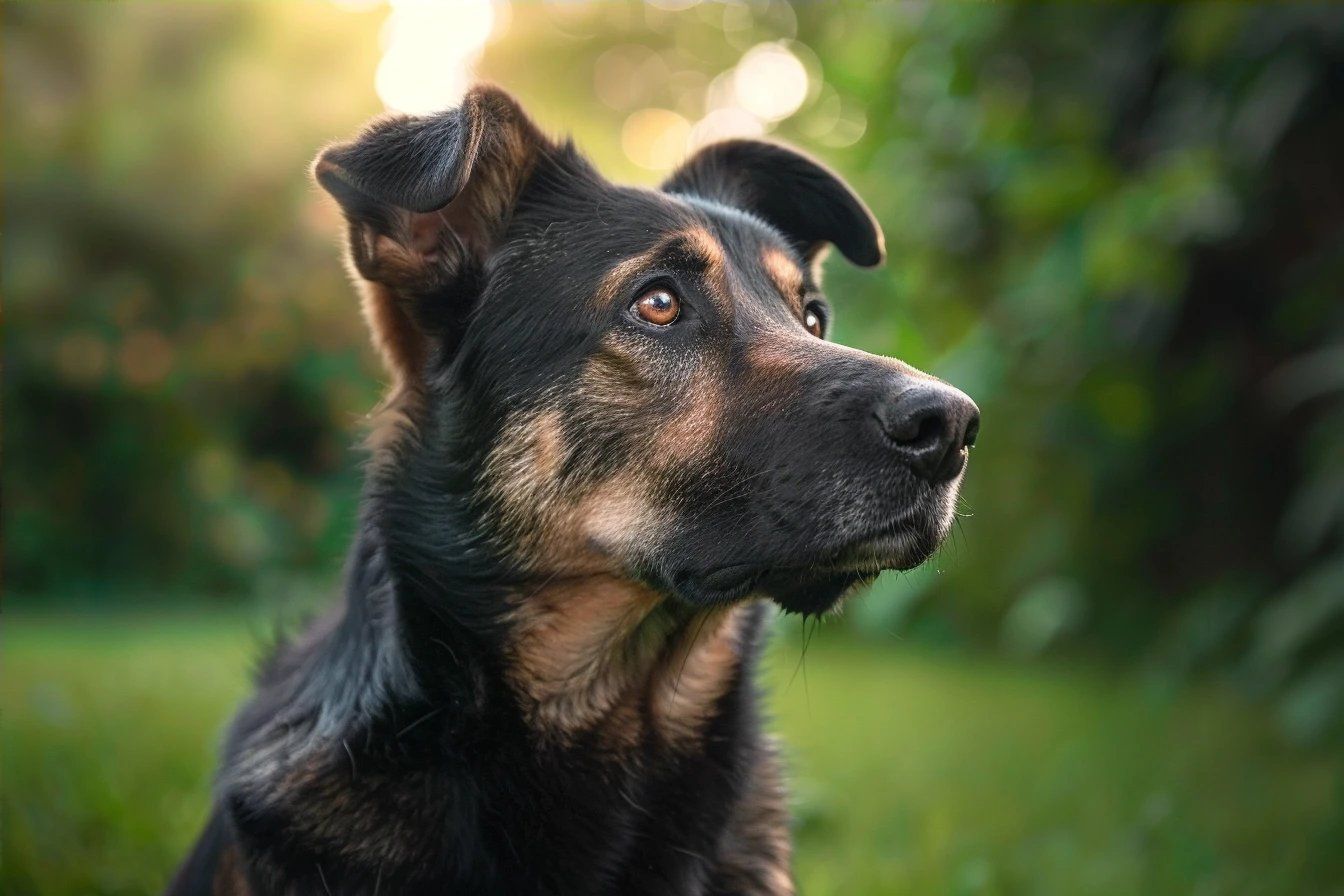
What does it look like as an adult?
Size, coat type, and proportions vary depending on the parents and on the individual dog. Puppies from the same litter can differ quite a lot. It would be misleading to promise a precise weight or height without reliable information about the dog itself. For an adult, the actual measurements are far more useful than assumptions based on the crossbreed alone.
When choosing a harness, transport crate, or bed, measure the chest girth, functional length, and current weight. A product labeled “large dog” is not automatically suitable. Also check the available space in your car and whether the dog can get in and out without jumping from a significant height.
Temperament: ask the questions that affect daily life
Instead of asking, “Is he friendly?”, ask, “What does he do when the doorbell rings?” Find out how he reacts to dogs on walks, handling, traffic, and moments when he does not get what he wants right away. Being sociable with people does not necessarily mean he will be relaxed around every animal.
A shelter may not have a full picture of how the dog behaves in a home. That is not a lack of transparency if the staff says so clearly. In that case, ask about several meetings and what kind of support is available. A reaction in a noisy kennel should always be interpreted in context.
Prepare the first few weeks without expecting too much
At the beginning, keep visits and busy outings to a minimum. Show him where to drink, sleep, and retreat when he needs peace. Keep routines fairly regular and make the environment easy to understand. There will be plenty of time later to discover markets, café terraces, and group walks once the bond has settled.
Write down, briefly, which situations are easy and which are difficult. For example: “calm on the canal path, tense at the street crossing.” This kind of note helps you adjust routes and expectations. It is better to succeed with a few small experiences than to overload the dog in one long day and spend the evening managing stress.
Activity matters, but not only in terms of distance
Alternate exploratory walks with a few kibble-search games in a clean, safe area, short training exercises, and rest. Leave time for sniffing. A dog using its nose does not need every outing to feel like a sporting event.
For running or long hikes, wait for guidance that suits the dog’s age and physical condition. Blue Cross advice on running with your dog stresses that effort should be adapted to the individual. A dog that slows down, limps, or recovers poorly should be examined rather than encouraged to keep going.
The guidance on choosing a dog for hiking is useful for thinking ahead about terrain, heat, and the possibility of turning back. A large size does not mean the dog can do everything.
Guarding instincts and visitors: avoid misunderstandings
Do not try to turn the dog into a guard specialist. If he watches the door closely, create a quiet place at a distance for arrivals. Let visitors come in without asking them to pet him or put a hand under his nose. Give him the choice to approach when things are calm.
On walks, increase distance from anything that causes difficulty. Rewarding a glance toward you or a successful turn away is far more effective than pulling on the leash while repeating his name. If reactions are intense, the help of a professional can prevent problems from becoming entrenched.
Coat, health, and budget: the less photogenic side
Expect brushing and dog hair around the house. Get the dog used to a comb through short, comfortable handling sessions. A painful area or sudden refusal deserves attention, not a stronger hold.
Ask your veterinarian which follow-ups make sense based on the dog’s background and history, especially if joint problems are known. Keep any available test results, but do not treat the crossbreed as a guarantee of good health. Also plan for pet care and set aside money for unexpected issues.
Can it live with children or in an apartment?
Yes, for some individuals, if the environment and organization are suitable; it is never a guarantee based on the cross alone. Children must respect the dog’s rest and mealtimes, under supervision. In an apartment, hallway noise, stairs, and time alone deserve as much attention as square footage. Guidance on apartment living for dogs can help you assess whether your situation is realistic.
The best candidate is the one whose observed needs match the life you can truly offer, including rainy days and busy weeks.
To share this article, copy its address into your browser.