A treat that is too large can interrupt training while the dog chews, and another may end up crushed at the bottom of your pocket. For learning, choose a reward that suits the dog’s health, can be delivered quickly, and is motivating enough for the situation. The total amount matters just as much as the treat itself.
The reward should match the difficulty
In the living room, part of the dog’s regular food allowance may be enough. Outside, surrounded by smells, movement, and distractions, your dog may need something more appealing. That does not mean you should automatically offer a treat that is richer or larger.
Test preferences in a calm setting and use small quantities. Watch what the dog takes willingly and what it eats without hesitation. Then keep several options on hand that fit within the dog’s diet.
If the dog refuses food during training, first look at the level of difficulty, the distance from distractions, and the dog’s overall state. A strong fear response cannot be fixed simply by producing a tastier treat. Step back to a situation where the dog can still pay attention without feeling overwhelmed.
Size and texture: prepare before you start
Choose small pieces that are easy to swallow without rushing, and that suit the dog’s mouth and eating style. A treat meant to be chewed slowly is a poor choice when you need several quick rewards in a row.
You can divide a suitable product into many small portions instead of giving a full piece for every successful attempt. Make sure cutting it does not create hard fragments or pieces that are too large for safe use.
Prepare the amount needed for the session in a clean container or pouch. Keep the rest stored away: this makes it easier to track what has actually been given and helps prevent the familiar “just one more handful” habit.
Count calories, not just the number of pieces
Two treats of the same size can have very different energy values. Check the calorie information and the manufacturer’s guidance, then take all other extras given during the day into account.
The PDSA recommends keeping treats to a small share of daily intake, with a general maximum of 10%. That is a ceiling, not a target to aim for. Dogs on special diets need advice tailored by a veterinarian.
As a simple example, if a veterinarian has set a daily energy allowance of 500 kcal, then 10% equals 50 kcal. A treat worth 5 kcal would already use up one tenth of that allowance. This is not a feeding prescription; it simply shows how quickly small rewards add up.
Allergies, excess weight, medical diets: do not choose a new extra on your own
In the case of an elimination diet or therapeutic feeding plan, even a small training treat can interfere with the instructions. Ask which rewards are allowed. In some situations, part of the usual food may be used instead.
For a dog that needs to lose weight, work with the veterinarian to find a way to keep rewards in training while controlling calorie intake. Training does not require removing every positive consequence; it requires choosing the right ones.
Avoid seasoned table scraps and products whose ingredients are unclear. “Natural” or “grain-free” does not guarantee proper nutrition or better individual tolerance.
Give the treat at the right moment
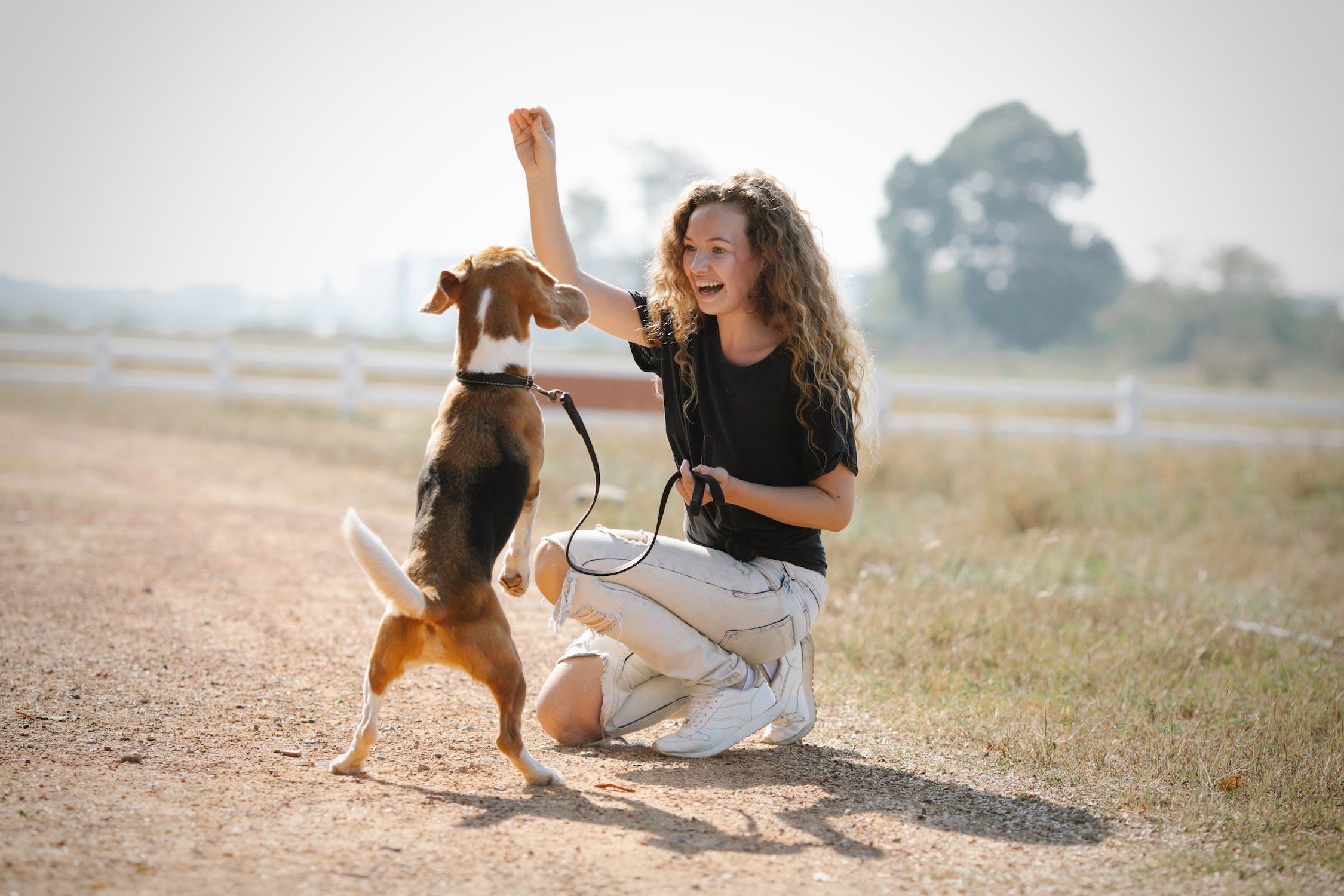
Reward the dog immediately after the desired action, using a simple gesture. If you spend too long searching in your pocket, the dog may have already moved on to something else. A short, consistent marker word can help signal success before the treat is delivered, as long as it has been previously linked to that reward.
Keep your hand at a height that does not encourage jumping if you are working on calm behaviour. The guide for dogs that jump on people shows how the way you deliver the reward can make an exercise easier or harder.
Do not necessarily show the food before every request. Once the behaviour is understood, give your usual cue and then reward the response. This helps prevent the visible treat pouch from becoming a constant condition for cooperation.
Food is not the only option
A shared game, a chance to sniff, or a kind of interaction the dog enjoys can also reward good behaviour. Their value depends on the dog and on the moment. A cuddle forced on an animal that would rather explore will not necessarily have the effect you want.
To choose a short activity between two exercises, consult a guide to toys based on play style. Be careful not to raise excitement so much that the next task becomes harder.
A routine that is easy to maintain
Prepare portions in advance, keep track of extras already given, and keep sessions short. Clean the pouch, follow storage guidelines, and throw away food that has gone bad. Moist or fresh products need extra care during long outings.
When the exercise becomes easy, vary rewards and settings gradually. Keep the experience pleasant: knowing how to do something does not mean it should be repeated endlessly without purpose. The best sign is a dog that stays engaged, receives a clear request, and gets a reward amount that fits its needs.