A dog walking in cold rain has very different needs from a dog with a thick undercoat trotting along on a dry winter day. A coat can make some dogs more comfortable, but it is neither necessary for every dog nor enough to make every outing safe. The right choice depends first on the animal, the weather, and the activity.
Before looking for something to cover your dog, pay attention to how it behaves outside. The most useful garment is the one that allows normal movement and keeps the dog comfortable, not the one that simply looks the cutest.
Which dogs may need an extra layer?
A thin coat, little body fat, very young age, older age, or certain health conditions can make cold weather harder to tolerate. Very lean dogs, for example, are not protected in the same way as dogs with a dense undercoat.
However, coat length alone is not enough to decide. If you want to identify dogs commonly considered short-haired, you can find short-haired breeds here, but even that kind of list cannot replace observing your own dog. Two dogs of the same breed may have very different needs.
Wind, rain, the length of the walk, and how often the dog has to stand still all matter too. Waiting motionless while a person chats is not the same as an active walk. The winter advice from Dogs Trust also emphasizes adapting walks and introducing a coat gradually.
The signs to watch for, without blaming everything on the cold
Is your dog slowing down, looking for shelter, curling up, or trembling? Shorten the walk and get the dog dry. A dog does not need to “tough it out” by staying outside while uncomfortable.
These signs do not always mean the dog is cold: pain or anxiety can also explain a refusal to move forward. Persistent trembling indoors, weakness, an unusual gait, or lethargy calls for veterinary advice. If hypothermia is suspected, move the dog to shelter, wrap it in a dry blanket, and contact a professional quickly, without applying intense heat directly to the skin.
There is no single temperature at which every dog must wear a coat. One isolated number can create a false sense of certainty.
Raincoat, fleece, or lined coat?
| Situation | What to look for | What to watch out for |
|---|---|---|
| Rain, mild temperature | A light water-resistant layer | Avoid a lining that is too warm for the activity. |
| Cold, dry weather, sensitive dog | Suitable insulation with some flexibility | A fabric that absorbs moisture becomes uncomfortable if it gets wet. |
| Cold, wind, and rain | An outer shell plus appropriate lining | Make sure the inside stays dry. |
| Sick dog or dog recovering from illness | A choice approved in line with the dog’s care | Do not rub against wounds or interfere with any medical device. |
A coat does not by itself prevent infections, stomach illness, or poisoning. It also usually does not cover the most exposed areas. Paws, ears, and tail still need attention.
Take measurements before looking at sizes
Measure the back length according to the manufacturer’s instructions, the chest girth at the widest point, and, if requested, the neck circumference. Write the numbers down: a size M does not mean the same thing from one brand to another.
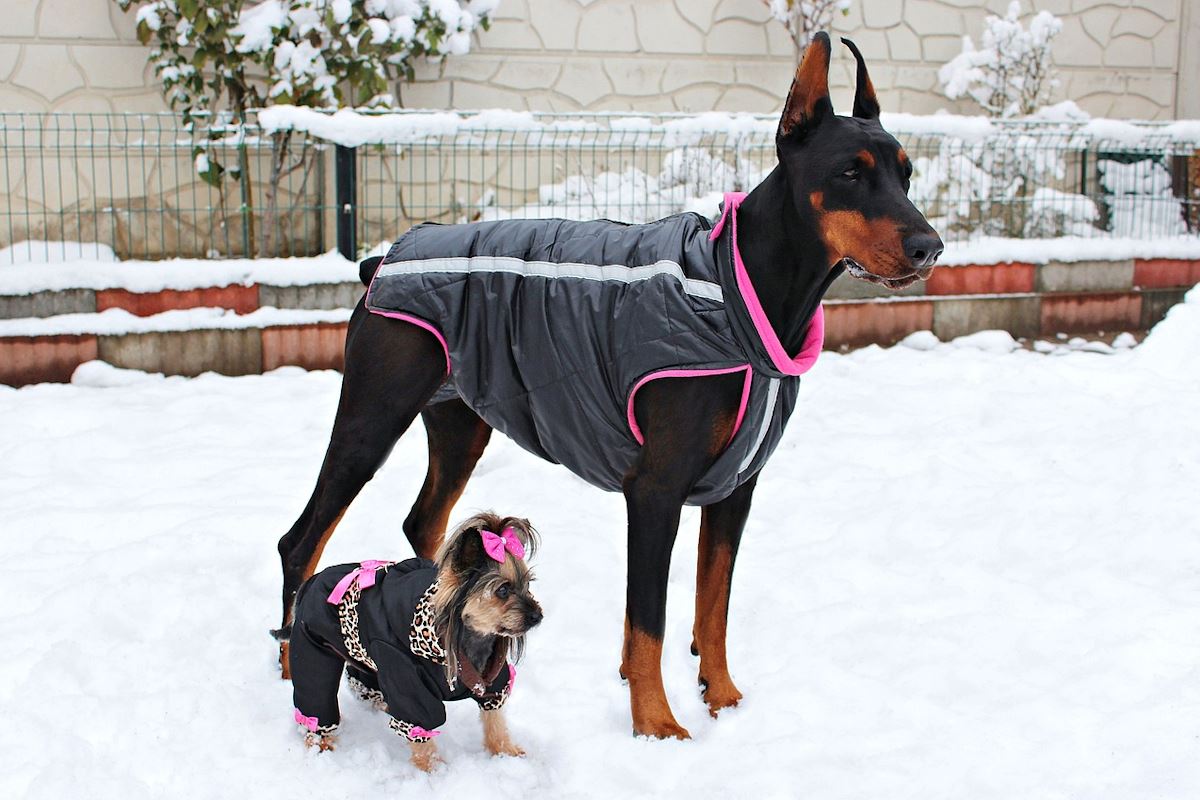
When trying the coat on, check the dog in motion. The dog should be able to move its shoulders, lower its head, sit down, and relieve itself. The edge should not rub behind the front legs. Fasteners should neither pinch nor allow the coat to twist under the belly.
Also check how it works with a harness. A leash opening does not turn a coat into restraint equipment. Unless a product is explicitly designed and suitable for that purpose, the leash should remain attached to the usual harness or collar.
A few models to compare based on measurements
The short selection below is meant to help compare cuts and features. Look at how well each model protects against rain, how easy it is to put on, how it washes, and what the return conditions are. Reflective strips can improve visibility under lights, but they do not replace a proper leash setup or your attention near traffic.
These links are affiliate links: we may earn a commission if you make a purchase, at no extra cost to you.
Teaching your dog to wear it without freezing up
Start by showing the coat, reward your dog for approaching it willingly, then reward brief contact. Next, put it on very briefly, without going straight out for a walk. Let your dog take a few steps, reward that, and then remove the garment.
If your dog freezes, struggles, or tries to pull it off, go back to an easier step and check the fit. Do not mistake stillness for acceptance. For dogs that are already sensitive to equipment or to leaving the house, a calmer-walk routine can help reduce the pressure around going out.
Checks to make when you get home
Remove any wet coat, dry your dog, and inspect the areas where rubbing may have occurred. A garment kept on indoors for too long can become too warm. If your dog is panting unusually or seems uncomfortable, take it off and adjust the activity; seek advice if the discomfort continues.
Rinse paws exposed to road salt and prevent access to antifreeze. Finally, wash and dry the coat according to the care instructions: fabric that stays damp will eventually smell and may irritate the skin. You can pair this routine with tips for cleaning a dog after a muddy walk. The right coat can make outings easier; it never replaces paying attention to how your dog experiences them.