
A Jack Russell that has always had a blue iris and a dog whose eye suddenly turns bluish are not the same situation at all. In the first case, the question is about pigmentation and ancestry. In the second, the eye needs to be examined, especially if it looks cloudy, red, or painful. A photo is not enough to decide.
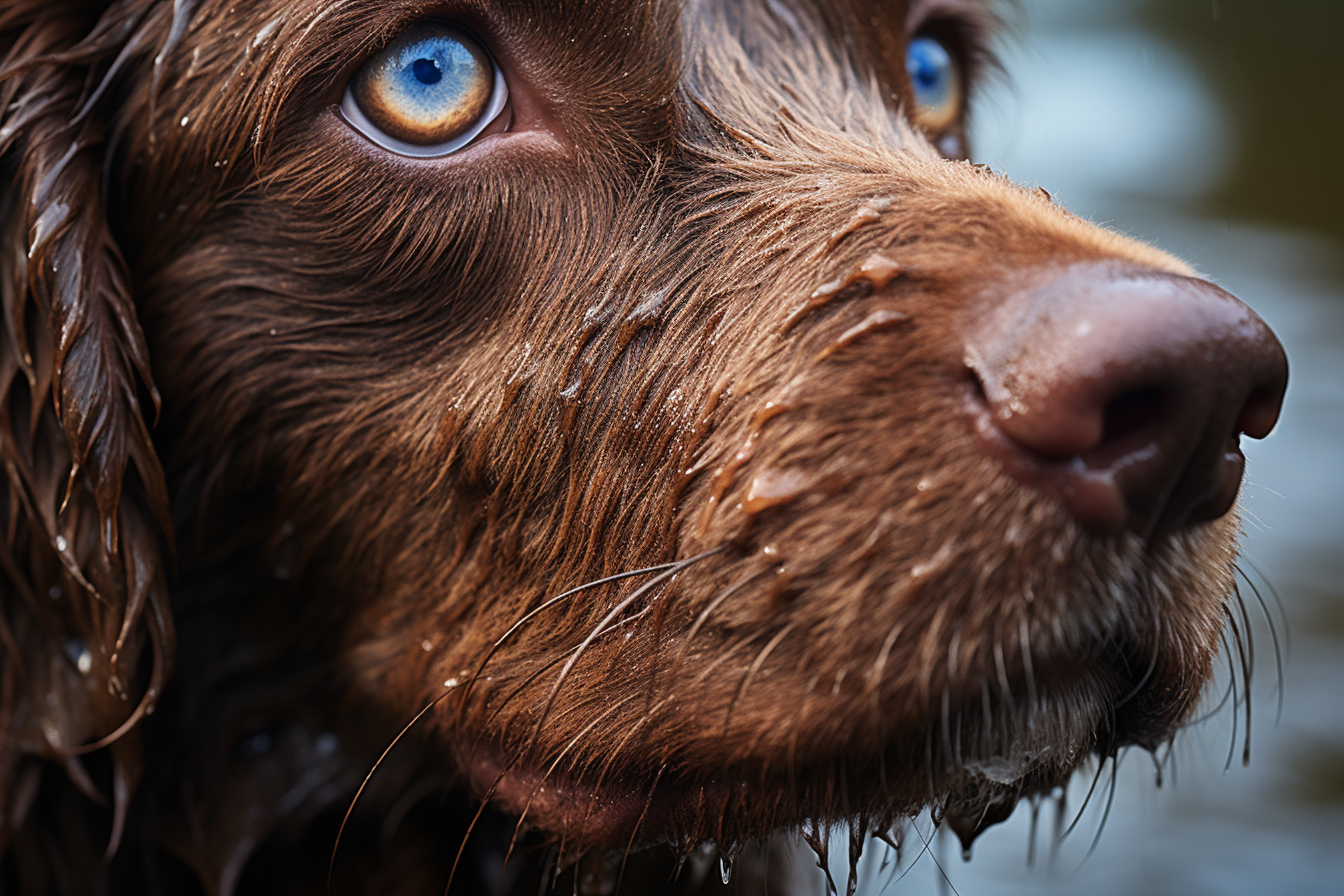
Are blue eyes part of the Jack Russell standard?
The FCI standard for the Jack Russell Terrier describes dark eyes. A blue iris therefore does not match the breed description. That does not make the dog any less lovable, but it does raise a serious question if an advertisement offers a “rare purebred blue-eyed Jack Russell” at a premium price.
Even so, you should not infer a dog’s pedigree from eye colour alone. Crossbreeding is possible, but appearance by itself does not prove it. Ask for the birth certificate, identification details, and information about the parents. A reliable breed guide explains what documents can confirm and what a simple resemblance cannot establish.
Blue iris or blue haze: notice what has changed
| What you observe | The right response |
|---|---|
| A light iris that has been there since the first photos, with a clear eye and a comfortable dog | Mention it during a veterinary visit and check the dog’s background if needed. |
| A blue reflection on a single flash photo | Take another picture in natural light without flash and avoid jumping to conclusions. |
| An eye that has become cloudy or changed in appearance | Arrange a prompt appointment, even if the dog still seems to see well. |
| An eye that is closed, red, rubbed with a paw, or linked to a sudden drop in vision | Contact a veterinarian without delay. |
The coloured area around the pupil is the iris. Cloudiness may involve other structures inside the eye. In older dogs, several conditions can create the impression of a veil, and to an owner they may look very similar. VCA explains, among other things, the difference between lens ageing and cataracts. A proper diagnosis requires an examination.
Can a puppy’s eye colour change?
Pigmentation can continue to develop during growth. A very young puppy’s eyes therefore do not guarantee the colour they will have as an adult. Be cautious with any commercial promise based on a litter photo. Lighting, image processing, and the puppy’s age at the time the picture was taken can all strongly affect how the eyes appear.
You can keep a few dated photos taken under similar conditions. They may help you describe a change to a veterinarian, without turning observation into a stressful daily inspection. Do not force the eyelids open and do not shine a strong light into the eye just to “see better.”
Blue does not mean blind or deaf
Eye colour tells you nothing reliable about vision or hearing. Some pigmentation traits may be associated with inherited risks, but assigning a specific gene or diagnosis to a Jack Russell based only on its eyes would be misleading. A professional will choose the relevant tests based on the dog, its history, and its symptoms.
Before adoption, ask whether anyone has noticed a problem: a puppy that startles when touched, difficulty locating sounds, repeated collisions, or discomfort in bright light. These are facts to pass on, not tests to invent by clapping your hands near the dog’s ears. A proper check-up can remove a real doubt.
What should you do if the eye looks irritated?
A dog that keeps one eye closed, rubs its face, or suddenly avoids light may be in pain. Prevent scratching as much as possible, then call the clinic. Do not use human eye drops, old medication, or any “natural” remedy. Some products can worsen corneal damage.
When you call, note when the change started, whether there was a bump or injury, any discharge, and anything already applied. A recent change in the eye matters far more than its usual colour. There is no point in buying a supplement said to maintain blue eyes: the priority is an appropriate examination, not a product linked to coat or eye colour.
Before reserving a puppy, ask these three questions
- What documents prove the puppy’s origins and match its identification number?
- Has a veterinarian noticed any eye abnormality or recommended follow-up?
- Why would this particular feature justify a higher price?
A clear answer, backed by documents, is worth far more than a sales pitch about an “exceptional” colour. You are choosing a companion and accepting its needs for years to come; the blue in its eyes should not distract from everything else that matters.