A carrot that falls off the cutting board, a piece of chicken, the last spoonful at the bottom of a yogurt cup: can dogs share human food? An ingredient may be non-toxic without being suitable in larger amounts, and a recipe can hide a dangerous item you can no longer see. That distinction is what prevents unpleasant surprises.
The guidance below is mainly for a healthy adult dog. If your dog follows a veterinary diet, has a medical condition, or lives with an allergy, ask before adding any extra food.
Simple foods you can sometimes share
Offer only a small piece, plain, and sized to the dog’s mouth. The goal is an occasional treat, not a replacement for a full meal. Introduce one new food at a time so you can see how it is tolerated.
| Food | How to serve it | What changes the response |
|---|---|---|
| Chicken or turkey | Cooked, without bones, skin, or sauce | Marinade, garlic, onion, excess fat |
| Egg | Cooked, in a small amount | Butter and seasoning in the preparation |
| Carrot, zucchini, green bean | Plain, cut into easy-to-swallow pieces | Too hard a texture, large chunks, very salty canned vegetables |
| Apple | Flesh only, without core or seeds | Whole fruit swallowed too quickly |
| Rice or pasta | Cooked, plain, in a small portion | Sauce and an already sufficient daily ration |
The ASPCA notes the limits of food sharing: regular pet food should remain the foundation, and fatty or sugary extras are not harmless. A food that is safe in itself is not a reason to empty your plate into the bowl.
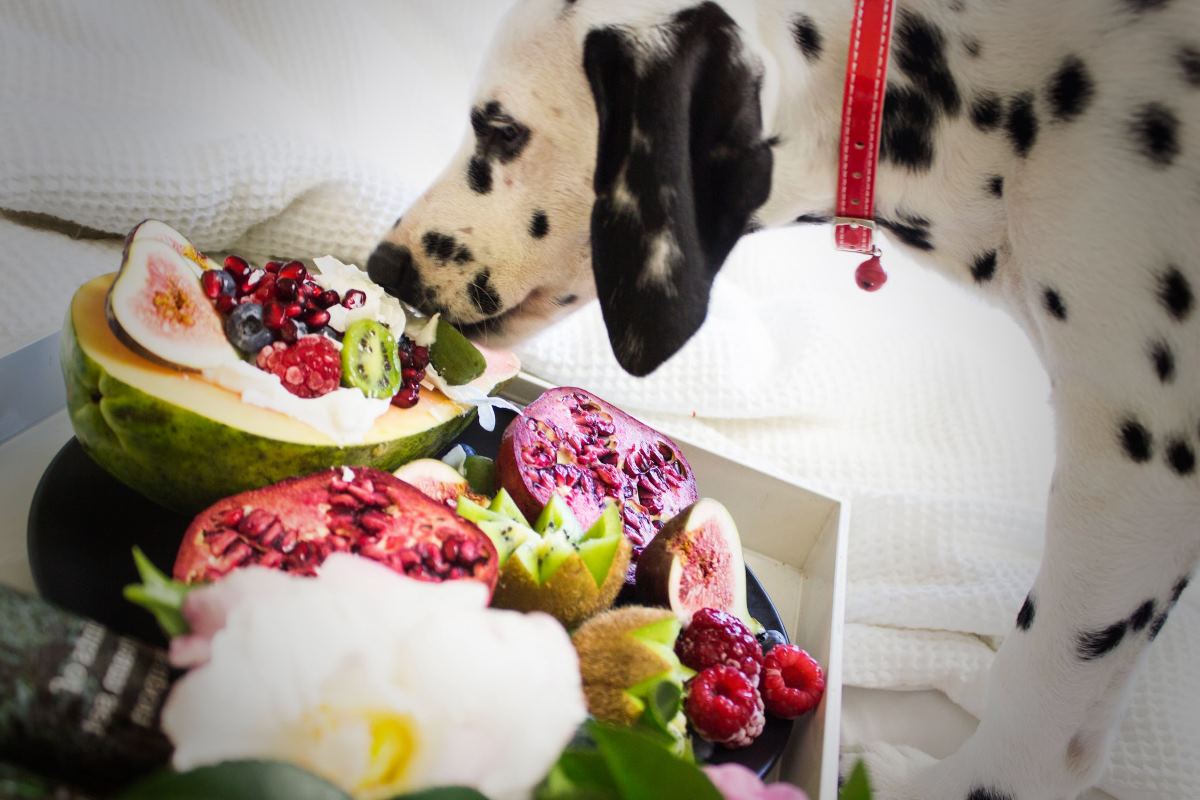
Toxic foods: don’t wait for symptoms
If your dog has eaten any of the following products, contact a veterinarian to assess the risk based on the amount, the product, the dog’s weight, and the time of ingestion. Do not assume that a small amount is automatically safe.
| Keep out of reach | Where is the risk hidden? |
|---|---|
| Chocolate and cocoa | Pastries, powder, bars; concentration matters |
| Fresh or dried grapes | Raisin bread, muesli, cakes, and snack leftovers |
| Xylitol | Some chewing gums, candies, and “sugar-free” products |
| Onion, garlic, leek, chives | Raw, cooked, or powdered in sauces and broths |
| Caffeine and alcohol | Drinks, grounds, supplements, and alcoholic preparations |
| Macadamia nuts | Cookies and mixed nuts |
| Raw dough containing yeast | Bread dough left to rise |
The ASPCA toxic foods list details these hazards. Your dog cannot tell what will cause harm, and an appealing smell is often exactly what draws them in.
“Not toxic” does not mean “a good idea”
Cooked bones can splinter, and both bones and other hard objects can cause injuries or digestive problems. A pit or stone can also block the digestive tract. Remove bones, pits, packaging, and skewers before leftovers become accessible.
Cold cuts, fried foods, butter, and sauces are heavy in fat or salt. Milk can cause digestive upset in dogs that do not tolerate lactose well. Cheese is not a universal poison, but its calories, fat, and salt make it an extra to limit, and in some dogs to avoid entirely.
Also watch out for moldy foods, compost, and garbage bins. Closing a low cabinet and moving a cooling dish away from the edge of the counter are often more effective than shouting “no” too late.
How much can you give without unbalancing meals?
Treats, leftovers, chews, and foods used to give medication all add up. Keep extras very small in the overall daily intake, and adjust their share of the ration if you reward your dog often. For training, several tiny pieces are generally more practical than one large bite.
Set aside the day’s allowance in a small container and make sure the whole family follows the same rule. When it is empty, nothing more is added quietly. You can also use part of the daily kibble allowance if that is motivating for your dog. A guide on choosing training treats can help organize that routine.
A homemade meal built at random from meat and rice is not balanced enough to feed long term. If you want to replace a complete diet, have a veterinarian with nutrition expertise formulate an appropriate ration.
He has already eaten something suspicious: the right reflexes
- Remove the rest of the product from reach.
- Keep the packaging and ingredient list.
- Estimate the amount and the time, without wasting time trying to obtain impossible precision.
- Call your veterinarian or an emergency service and provide the dog’s weight.
- Follow the instructions: do not make the dog vomit, and do not give salt, oil, or milk as an “antidote.”
Diarrhea or vomiting after a meal should be reported, but their absence at first does not prove that everything is fine. Some effects are not visible right away.
An infographic to keep, with the guide’s nuances in mind
The illustration below brings together visual reference points. It does not replace the precautions about preparation, quantity, and the dog’s individual profile: the tables and explanations in this article provide those nuances.