A hole-ridden lettuce leaf can easily create the impression that you have found the perfect meal. In reality, lettuce is neither every snail’s favourite food nor a complete diet. For a herbivorous land snail kept in captivity, the real challenge is to offer a varied selection of plants suited to the species, provide a source of calcium, and remove leftovers before they begin to spoil.
Start by identifying your snail
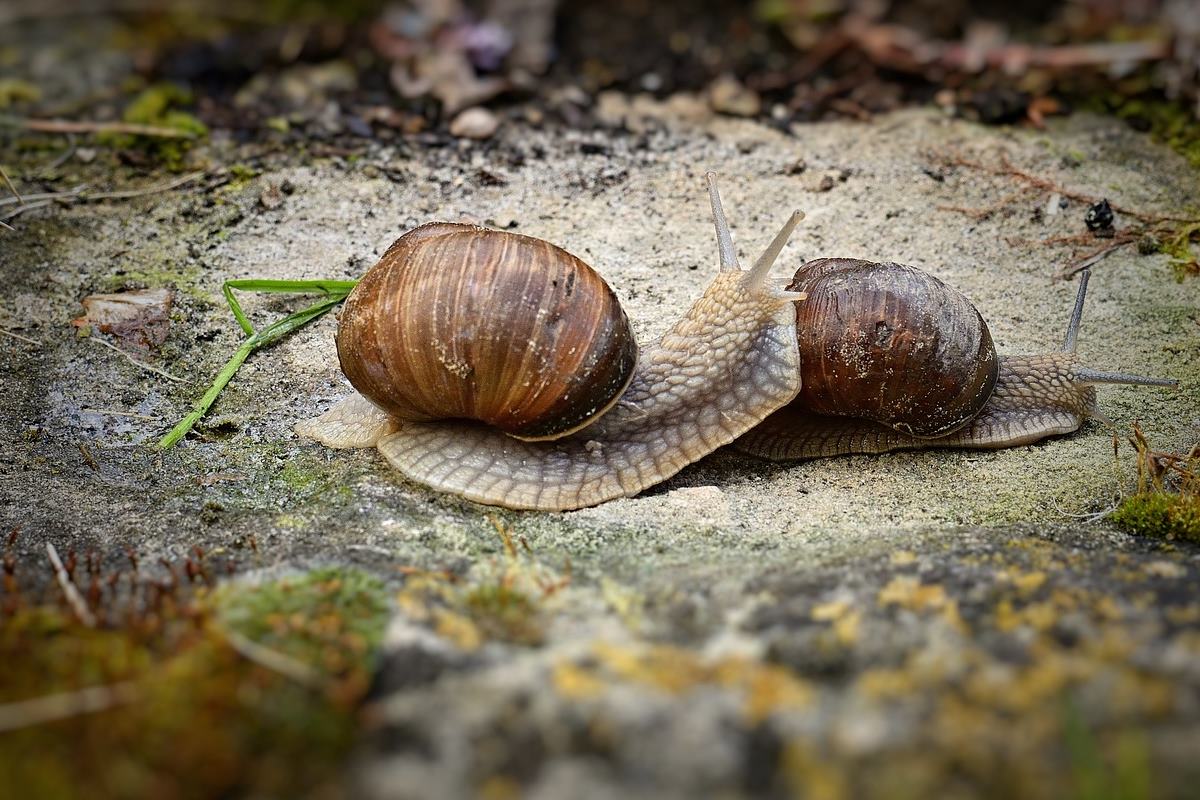
The word “snail” covers animals with very different diets. Advice for a herbivorous land snail does not automatically apply to an aquarium snail, let alone to a predatory species. If you buy one from a pet shop, make sure you also receive its scientific name and a proper care sheet. A similar-looking photo found online is not always enough to identify the species correctly.
If you simply come across a snail in the garden, you usually do not need to prepare a meal for it. Leave it in its natural environment and enjoy observing it. Collecting several individuals in order to “try snail keeping” quickly raises issues of reproduction, housing, and release that a box of lettuce cannot solve. A guide to snail habitat is also helpful when thinking about the surroundings the animal needs.
What should you feed a herbivorous land snail?
For giant African land snails, the RSPCA guidance mentions leafy greens, courgette, cucumber, and various fruits. It recommends washing the food, removing leftovers within 24 hours, and supplying calcium. These are useful references for those animals, but they are not a universal rule for every gastropod.
| Food or category | How to use it | The mistake to avoid |
|---|---|---|
| Leaves suitable for the species | Rotate several identified, untreated plants | Picking an unknown plant by the roadside |
| Courgette and other compatible vegetables | Offer a small portion that is easy to reach | Filling the entire terrarium with food |
| Cucumber and lettuce | Use them as part of a varied menu | Making them the only foods because they are eaten quickly |
| Suitable fruits | Give in small amounts and remove leftovers promptly | Leaving fruit pulp to ferment in a warm enclosure |
| Appropriate calcium source | Make it available according to the species’ needs | Using a DIY product or a human supplement |
To see what is actually being eaten, place two small, separate portions on a clean, accessible surface. Take a photo before and after a period of activity. That makes it easier to distinguish genuine preference from food that has simply dried out. Do not remove all other plants in an attempt to force the animal to accept something new.
Calcium matters as much as vegetable choice
The shell needs calcium to form and grow. A cuttlebone intended for animals can be an appropriate source within a correctly managed care routine. Choose a product with no fragrance and no decorative coating. If the shell is cracked, unusually malformed, or deteriorating, however, competent advice is needed: adding calcium alone will not fix every possible cause.
Avoid improvised mixtures made from several powders. Before buying a supplement, note what the chosen food already contains and find out how it should be offered for the species in question. More is not automatically better. The same caution applies to products sold under broad labels such as “snail food”: check exactly what they are meant for.
A simple routine to keep meals from spoiling
- Start with a small amount. Offer a modest portion rather than a mountain of vegetables.
- Wash and inspect. Remove damaged parts and avoid any plant whose treatment history you do not know.
- Place the food in the same spot. That makes leftovers easier to find under leaves or décor.
- Check daily. Remove mouldy, dirty, or fermented food immediately, even if the usual time limit has not passed.
- Adjust based on what you observe. Repeated leftovers mean the portion should be reduced or the keeping conditions reviewed, not that another meal should simply be added on top.
This routine is more useful than a fixed rule such as “feed three times a week.” The amount eaten depends on the species, size, number of animals, and their activity level. Keep a small notebook with your observations; it becomes especially valuable if the snail’s appetite changes.
What should be kept out of the terrarium?
Do not give salty or seasoned table scraps, alcohol-containing foods, or products treated against slugs. Bread, biscuits, and cooked pasta do not belong in the role of treats. Suitable food does not need sauce or salt. Also avoid unknown plants and products described as “natural” without any clear indication that they are safe for the species.
Water deserves as much attention as the food dish. For the large land snails covered by the RSPCA guidance, the container should be very shallow to prevent drowning. Do not use a deep bowl designed for a different animal. The humidity in the enclosure must also suit the species: a soaked enclosure is not automatically a comfortable one.
It is not eating: check before offering more food
First, consider when you are actually observing it. A discreet animal may have eaten during the night. Next, look for any recent change: a moved enclosure, altered temperature, humidity shift, new substrate, or a different food. Return to the documented keeping conditions rather than waking or handling the snail constantly.
Persistent unusual inactivity, an injury, or visible decline warrants contacting a veterinarian familiar with invertebrates. Prepare the species name, photos, enclosure parameters, and the meals offered. That information is far more useful than a series of randomly placed vegetables.
Pour partager cet article, copiez son adresse dans votre navigateur.