
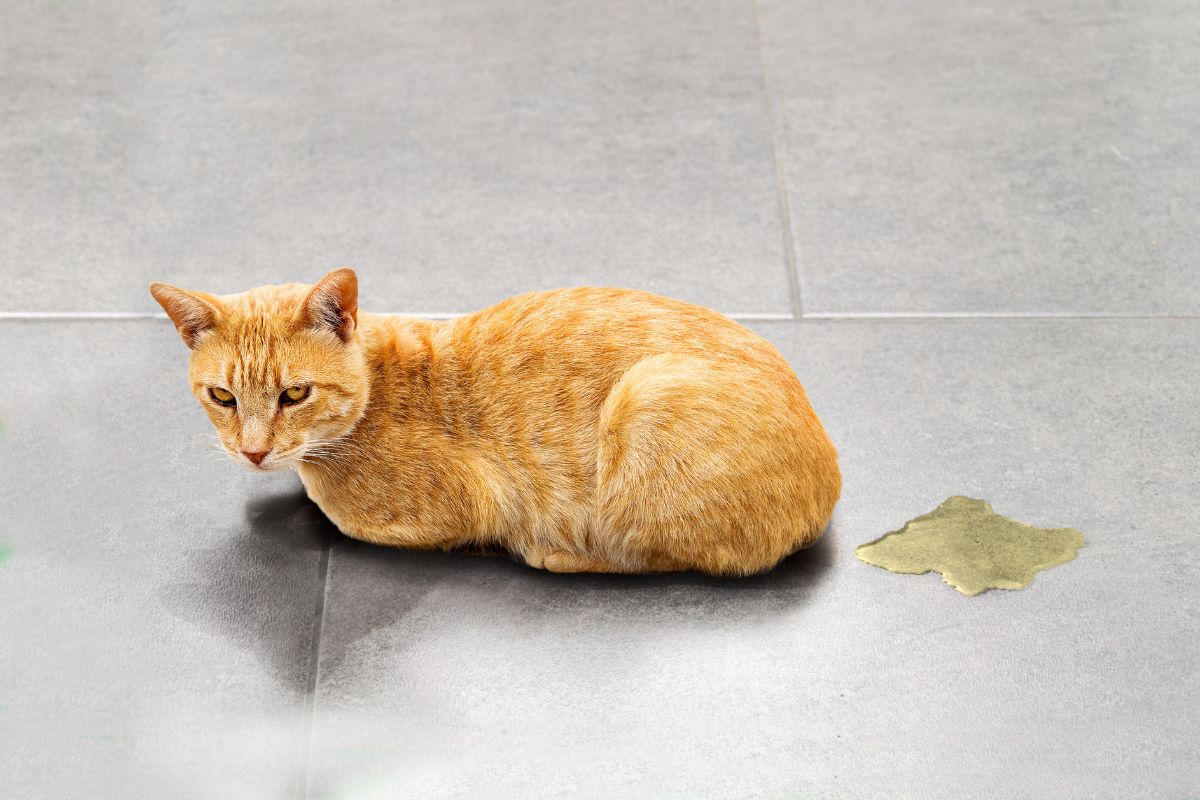
A puddle on the bed, a recurring smell near the sofa: it is frustrating, exhausting, and it is completely understandable to want to clean everything at once and change the litter straight away. But a cat that urinates outside the litter box does not automatically have a cleanliness problem. It may be in pain, producing more urine than usual, or marking territory. The right solution depends on the cause.
First priority: if the cat keeps squatting without producing much, cries out, vomits, or seems lethargic, contact a veterinarian immediately. A few drops are not enough to rule out a urinary blockage, especially in a male cat. Do not wait to see whether a different litter will solve it.
Puddle or small spray: what to look at
Without trailing the cat around the house or startling it, watch carefully if you happen to catch the moment. Note the posture, the surface chosen, and the approximate amount. A photo of the area and a few quick notes on your phone will be far more useful to the vet than a vague “it’s going everywhere.”
| Observation | Possible lead | What it does not prove |
|---|---|---|
| Squatting, with a puddle on the floor or on laundry | Urination outside the box: pain, access issues, surface preference | That the litter box is simply dirty |
| Standing, tail raised, small spray on a vertical surface | Urine marking | That no medical check is needed |
| Repeated trips and very small amounts | Urinary trouble that needs prompt assessment | That the cat is only constipated |
| Large puddles with unusual thirst | A change in urine production to report | That water should be restricted |
Check the cat’s health before reaching for a repellent
A recent change deserves a veterinary consultation, even if the cat is still eating and playing. The vet will decide which tests are needed, including urine tests, based on age and symptoms. Do not use leftover antibiotics or a random “urinary” diet to treat a problem that has not been identified.
The Cornell guide to feline urinary disorders also highlights how urgent an obstruction can be. If you are unsure which service to call, seek emergency veterinary help right away when an animal is in distress.
Review the route to the box, not just what is inside it
Think about the cat’s path from its resting place: stairs, a door that is sometimes closed, a dog lying in the hallway, another cat stationed at the entrance. A perfectly clean litter box can still be effectively out of reach. Place a toilet option in a quiet area the cat can access without a confrontation.
Choose a box large enough for the cat to turn around without awkward movements. A low entry helps animals that struggle to step over a high edge. In multi-cat homes, spread boxes across different locations: three boxes in a row will not solve a blocked hallway. Keep feeding, drinking, and resting areas separate.
If you want to test a different substrate, keep the old one beside the new option. Avoid changing the box, its location, and the texture at the same time; otherwise, you will not know what actually helped. A gradual approach is much easier to interpret when the cat is refusing the litter box.
Clean without reinforcing the problem
- Blot up the urine with an absorbent material, without spreading it across the whole surface.
- Use a cleaner made for animal urine and suitable for the fabric or floor. Test it discreetly first on delicate materials.
- Follow the recommended contact time and rinsing instructions; keep the cat away until the surface is fully dry.
- Wash any soiled textiles and check the underside of rugs, the foam inside furniture, and the gaps in a sofa.
Do not use perfume to hide the smell, and never mix household products. Punishing the cat, shouting, or rubbing its nose in the mess will not teach litter box use; it only adds a bad experience to an already difficult situation.
When marking keeps happening near a window
Look at what is happening in that spot: a cat outside, the arrival of another animal, or tension between the cats living inside. Partial visual screening, separate resting places, and a stable routine may all help. Also discuss neutering with the veterinarian if the cat has not been neutered. No spray can replace understanding the trigger.
To track progress, note each accident and where it happened, without turning the whole day into surveillance. Also record normal litter box use: moving from several accidents a day to a single isolated event is useful information. If the issue continues after the medical check and household adjustments, return to the veterinary team with those notes rather than buying more products one after another.