
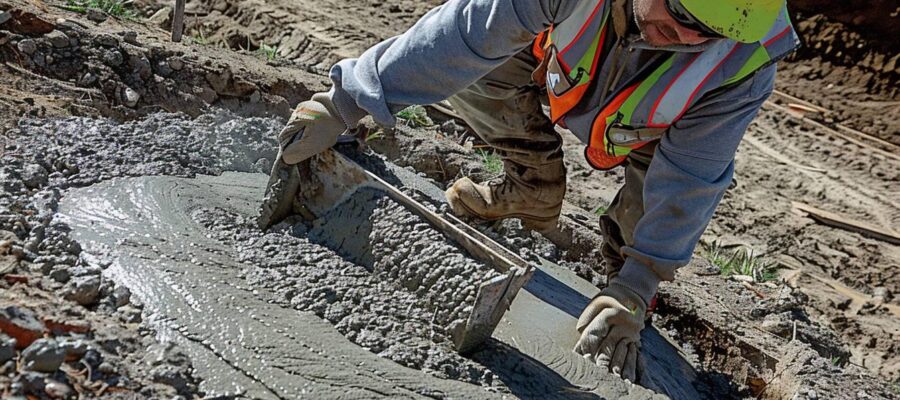
Concrete is an essential material in construction, and its use is common to make slabs. A question often comes back: can we sink a concrete slab directly on earth? In this article, we will explore the advantages and disadvantages of this method, as well as the precautions to be taken to obtain a solid and lasting result.
The steps prior to the realization of a concrete slab on earth
Before pouring a concrete slab directly on the earth, certain steps are necessary to prepare the ground and guarantee the solidity of the structure. First of all, it is essential to determine the type of soil (clay, sandy, silt, etc.) in order to adapt the composition of concrete and implementation techniques. Then, it is necessary to delimit the location of the future slab and proceed to earthworks. This operation consists in removing the plants present, level the soil and compact the earth to ensure a good seat in the slab.
The creation of a draining hedgehog
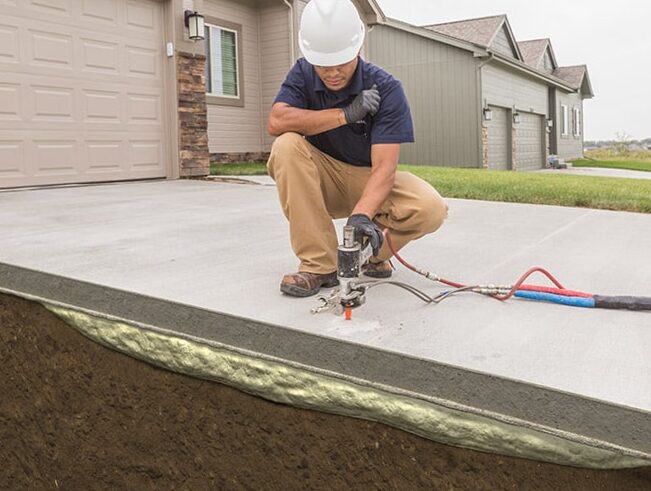
In some cases, especially when the soil is wet or clay, it is recommended to create a draining hedgehog under the slab. The hedgehog is a layer of granular materials (gravel, pebbles, etc.) which makes it possible to evacuate the water from the soil and to avoid the problems of humidity and swelling of the soil. This additional step improves the sustainability of the slab and prevent structural disorders.
The establishment of a geotextile film
Before pouring the concrete, it is advisable to put a geotextile film on earth. This synthetic material has the function of separating the slab from the elements of the soil, in particular plants, which could harm its solidity. The geotextile film also facilitates drainage and reduces the risk of water infiltration.
The advantages and disadvantages of pouring a concrete slab directly on the earth
Pouring a concrete slab directly on the earth has several advantages. First of all, this method makes it possible to save on the cost of materials (no reinforced concrete foundation) and on the workforce (less time spent digging and building foundations). In addition, it is suitable for land with small bearing capacity or a light slope.
Potential disadvantages
However, this technique also has certain drawbacks. The main risk is linked to the absence of reinforced concrete foundations, which can cause cracks or sagging if the soil is not stable enough or if the charges on the slab are important (heavy construction, vehicles, etc.). Furthermore, a slab flowing directly on earth can be more sensitive to variations in temperature and humidity, which can also cause structural disorders.
The precautions to be taken to make a concrete slab on earth
To pour a concrete slab directly on earth by limiting the risks, several precautions must be taken. First of all, it is important to choose a concrete suitable for the type of soil and to the mechanical constraints to which the slab will be subject. It will also be necessary to make sure to compact the ground before pouring and to create a draining hedgehog if necessary. Finally, it is advisable to use steel reinforcements (welded trellis) to strengthen the slab and avoid cracks.
The use of a professional to guarantee the success of the project
If you are not sure of your masonry skills or if you have doubts about the stability of the soil, it is wise to call on a professional. He will be able to advise you on the steps to follow and the materials to use so that your slab is solid and durable. In addition, he can help you get the necessary authorizations from your town hall.
A relevant choice according to the project and the type of field
In conclusion, pouring a concrete slab directly on earth can be an interesting solution in certain cases: small land, light construction projects or limited budgets. However, this method requires careful preparation of the terrain and respecting certain precautions to avoid structural problems. If you are not sure you can carry out this work yourself, do not hesitate to call on a professional to support you in your project.
In conclusion, placing a concrete slab directly on earth can be a practical and cost-effective solution, but it comes with specific advantages and challenges that must be carefully considered. This method is commonly used in construction due to its relative simplicity and reduced expenses compared to more complex foundation systems.
One major advantage is the straightforward installation process, which can save time and labor costs. When properly prepared, the ground can provide adequate support for the slab, making it suitable for certain types of structures such as sheds, garages, or patios.
However, several important precautions must be taken to ensure the slab’s durability and stability. Proper soil assessment and preparation—including compaction and moisture control—are critical to prevent uneven settling, cracking, or moisture infiltration. Installing a suitable vapor barrier and drainage system further protects the concrete from damage caused by ground moisture and frost.
On the downside, slabs placed directly on earth may be more vulnerable to ground movement, especially in areas with expansive or unstable soils. Without adequate reinforcement or foundation design, the risk of structural issues increases over time.
Ultimately, whether sinking a concrete slab directly on earth is the right choice depends on the site conditions, intended use, and local climate. Consulting with a construction professional or engineer is advisable to evaluate the soil and recommend the best approach.
When executed with careful planning and appropriate measures, this technique can provide a solid and lasting foundation that meets the needs of many construction projects, offering a balance between efficiency and performance.
Latest Posts Published

The assets of the ironwork style for your gate

What elements influence the price of fuel oil?

Yucca with drooping, yellow, dry, brown leaves at the end or that loses its leaves: what to do?
How to choose tiles that you will not tire

Debout, kitchen and dining table

The advantages of combined electricity and gas offers

When and how to plant an avocado in a pot: maintenance, watering, exposure, repotting

5 ideas for arranging the basement of a house

How to choose a floor wash robot
